

Los Angeles, CA
Dryer repair in Los Angeles County.
94 cities and neighborhoods across Los Angeles County, part of Los Angeles — 14 with a page on what that place does to a dryer.
Mon–Sat, 8am–8pm
- 94 places covered
- 14 with a page
- 10 repairs we do here
Book a visit
Three short steps, about a minute.
or call (844) 314-5837
Loading appointment form…
The appointment form couldn’t load. Please try again.
What Los Angeles County does
to a dryer.
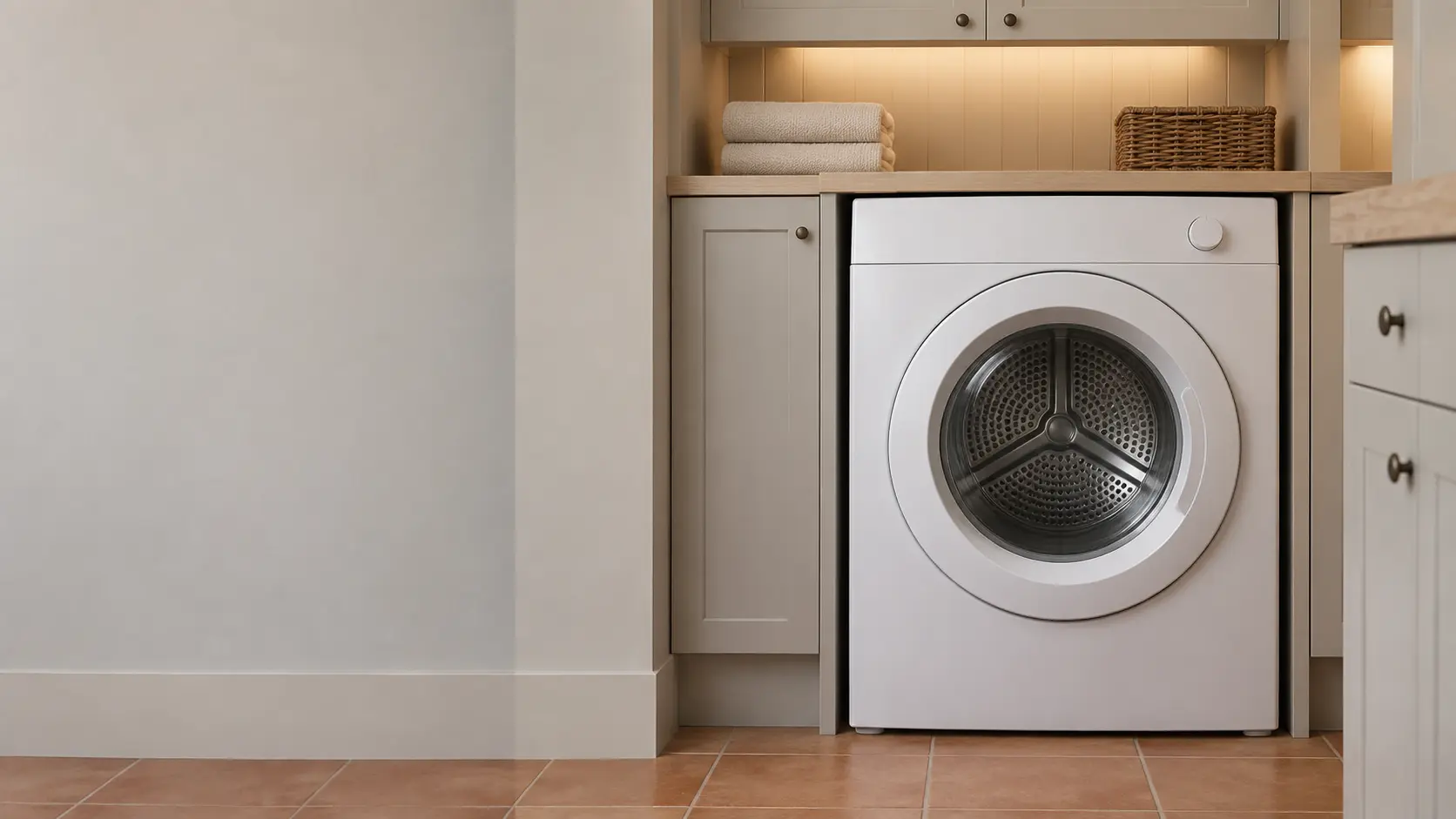
Where dryers sit in Los Angeles County: designed laundry rooms, pool and beach towels, gated communities.
All of Los AngelesDesigned laundry rooms
A designed laundry room often places the dryer where it looks best rather than where the vent is shortest, and a run that crosses a ceiling or turns several times is a common reason a new, high-end dryer takes too long.
Pool and beach towels
Where patios, lanais and outdoor kitchens wrap the house, the dryer's exterior hood can end up beside a grill, under a deck or behind planters. Hot exhaust needs open air around it, and a hood tucked into a covered corner pushes lint and moisture back toward the wall.
Gated communities
Large homes in gated communities often have a full laundry room with the dryer on a pedestal, and sometimes a second pair upstairs near the bedrooms. Each dryer has its own vent run, and the upstairs one is usually the longer and harder to clean.
Where we go
in Los Angeles County.
94 cities and neighborhoods across Los Angeles County, part of Los Angeles, 14 of them with a page on what that place does to a dryer. The same visit in each.
Bel Air
In the 90077 ZIP code that covers Bel Air, about 72 percent of occupied homes heat with utility gas, in 2020–2024 Census estimates.
Beverly Hills
Large houses here usually have laundry rooms finished like the rest of the house, with dryers on pedestals and sometimes a second pair near the bedrooms.
Brentwood
Family houses with a pool send a steady stream of towels through the dryer, and lint mixed with outdoor grit builds quickly in the duct.
Calabasas
About 65 percent of occupied homes in Calabasas heat with utility gas and about 31 percent with electricity, in 2020–2024 Census estimates.
Hancock Park
Renters occupied about 53 percent of Hancock Park's housing units, and house or apartment owners the rest.
Holmby Hills
Many of Holmby Hills' grand mansions went up in the years after the Wall Street Crash of 1929.
Malibu
A beach-house dryer handles sandy towels and damp swimwear, and it may sit unused for weeks between visits.
Manhattan Beach
About 73 percent of occupied homes in Manhattan Beach heat with utility gas and about 22 percent with electricity, in 2020–2024 Census estimates.
Pacific Palisades
Many houses here are being rebuilt or newly built, and a new laundry room is where the vent route is settled for decades.
Palos Verdes Estates
About 82 percent of occupied homes in Palos Verdes Estates heat with utility gas, in 2020–2024 Census estimates.
Pasadena
Older bungalows often put the dryer in a detached garage or a converted service porch, with a gas line and vent added long after the house was built.
San Marino
About 81 percent of occupied homes in San Marino heat with utility gas, in 2020–2024 Census estimates.
Santa Monica
About 60 percent of occupied homes in Santa Monica heat with utility gas and about 34 percent with electricity, in 2020–2024 Census estimates.
Studio City
In the 91604 ZIP code of Studio City, about 60 percent of occupied homes heat with utility gas and 37 percent with electricity, in 2020–2024 Census estimates.
Also covered in Los Angeles County
- Agoura HillsAn all-electric reach code for new construction took effect in Agoura Hills on February 25, 2023.
- AlhambraAlhambra has designated 26 single-family residential areas as historic neighborhoods, among them the Bean Tract and the Midwick Tract.
- ArcadiaHarry Chandler of the Los Angeles Times developed a large tract of estate homes in Arcadia.
- Beverly GroveDebates over zoning, housing density and anti-mansion rules in Beverly Grove continued into the 2020s.
- BeverlywoodRenters occupy about 30 percent of Beverlywood's housing, and owners about 70 percent.
- BradburyAt the 2010 census, owners occupied about 87 percent of Bradbury's occupied homes.
- BurbankBurbank's greenhouse gas reduction plan set a target of electrifying all new construction by 2023.
- Canoga ParkDaily highs in Canoga Park range from about 66 degrees in winter to about 93 degrees in summer.
- CarthayCarthay households averaged 2.1 people, small for Los Angeles, in a neighborhood of about average density for the city and county.
- Century CityThe whole of Century City makes up a single census tract, number 2679.01, covering about 0.4 square miles.
- ChatsworthChatsworth summers are hot and dry, with average daily highs of 90 to 100 degrees.
- Cheviot HillsCheviot Hills holds houses by noted architects, among them Raphael Soriano's Strauss-Lewis House and the Harry Culver Estate by Wallace Neff.
- Culver CityCulver City adopted a framework in October 2022 for banning natural gas in new buildings.
- Del ReyDel Rey is divided into eight census tracts that form its neighborhood council's Areas A through H.
- Echo ParkTemperatures in Echo Park run almost identical to those downtown, under a hot-summer Mediterranean climate.
- El SegundoEl Segundo takes its name from Chevron's second refinery, built there in 1911.
- EncinoThe whole Bedford Falls town set for It's a Wonderful Life was built on four acres in Encino in 1946.
- FairfaxThe Fairfax District averaged about 10,122 residents per square mile at the 2000 census, close to the density of Los Angeles as a whole.
- GlendaleGlendale's building electrification package, which includes EV charging and solar requirements for new buildings, took effect on January 1, 2023.
- Granada HillsOnly about 26 percent of the housing in Granada Hills is occupied by renters.
- Hermosa BeachWesterly sea breezes temper the summer heat in Hermosa Beach, where average temperatures run about 70 degrees in summer and 55 in winter.
- Hidden HillsThe 2020 census counted 635 housing units in Hidden Hills, 593 of them occupied.
- HollywoodA sign reading HOLLYWOODLAND went up in the hills in 1923 to advertise a housing development, and the last four letters came down in 1949.
- Hollywood / Central LAThe four most densely populated neighborhoods counted by Mapping L.A. all lie in Central Los Angeles, led by Koreatown and Westlake.
- Hollywood HillsThe 2000 census counted 21,588 people across the Hollywood Hills' 7.05 square miles, about 3,063 per square mile.
- Hollywood Hills WestAmong the neighborhoods of Central Los Angeles, Hollywood Hills West had the lowest share of renters and the oldest population.
- KoreatownAfter the Shelley v. Kraemer ruling ended racially restrictive covenants, Koreans began moving north of Olympic Boulevard to set up homes and businesses.
- La Cañada FlintridgeAugust is the warmest month in La Cañada Flintridge, with highs in the low to mid 90s and lows in the low 70s.
- Lake BalboaOwners hold about 66 percent of Lake Balboa's housing and renters about 34 percent.
- Larchmont VillageAt about 17,747 people per square mile in 2000, Larchmont had one of the highest population densities in Los Angeles County.
- Laurel CanyonA fire in July 1959 destroyed some 38 homes in Laurel Canyon.
- Los FelizThe gated enclave of Laughlin Park, inside Los Feliz, holds 60 houses.
- Malibu / Santa Monica MountainsThe range has dry summers with frequent coastal fog on its ocean side and rainy, cooler winters.
- Mar VistaMost of the dingbat apartment buildings south of Venice Boulevard in Mar Vista fall under the city's Rent Stabilization Ordinance.
- Marina del ReyThe Admiralty High-Rise, three condominium towers at the edge of Marina del Rey, holds about 800 units, home to nearly 30 percent of the community's population.
- Mid-WilshireWilshire Vista, within Mid-Wilshire, is a neighborhood of about 1,700 homes.
- Miracle MileDeveloper A. W. Ross laid out his Wilshire Boulevard strip to serve automobile traffic rather than pedestrian shoppers.
- MonroviaAt the 2020 census, owners occupied about 46 percent of Monrovia's occupied homes and renters about 54 percent.
- Mount OlympusIts developers marketed Mount Olympus alongside other tracts of theirs called Hollywood Oasis, Dor-Mar Estates and Willow Hills North.
- Nichols CanyonIn August 2005 a brush fire above Hollywood Boulevard threatened forty to sixty Nichols Canyon homes before firefighters put it out.
- North HollywoodRenters occupy about 75 percent of North Hollywood's housing.
- NorthridgeRenters occupy about 46 percent of Northridge's housing, and owners about 54 percent.
- PalmsTwo UCLA family and graduate student housing complexes stand among the apartment buildings on the main streets of Westside Village in Palms.
- Pico-RobertsonWith about 17,468 people per square mile at the 2000 census, Pico-Robertson ranked among the most densely settled neighborhoods in the city.
- Playa del ReyIn 1910 Playa del Rey opened the Motordome, the world's first board track, used for bicycle and early auto racing.
- Playa VistaPlaya Vista was one of six communities chosen in 1998 as a national pilot project of the Partnership for Advancing Technology in Housing.
- Porter RanchIn October 2015 SoCalGas workers found a leak at the Aliso Canyon natural gas storage field, about a mile north of Porter Ranch homes, and thousands of residents were relocated.
- Rancho Palos VerdesOfficials cut power to 245 homes in the Rancho Palos Verdes landslide area in September 2024, when the governor declared a state of emergency.
- Rancho ParkArea boosters named Rancho Park after World War II, when residents south of Olympic Boulevard sought an identity apart from Westwood.
- Redondo BeachRedondo Beach has a warm-summer Mediterranean climate, with mild winters and warm, almost rainless summers.
- ResedaReseda is named for Reseda odorata, the fragrant mignonette that was common in gardens of the time.
- Rolling HillsThe climate of Rolling Hills is classed as cold semi-arid.
- Rolling Hills EstatesAbout 90 percent of occupied homes in Rolling Hills Estates were owner-occupied at the 2020 census.
- San Fernando ValleyLADWP supplies electricity to the Los Angeles two-thirds of the Valley, Burbank and Southern California Edison serve other parts, and SoCalGas delivers the natural gas.
- San GabrielThe 2020 census counted 13,461 housing units in San Gabriel, about 96 percent of them occupied.
- San Gabriel ValleyEarly Chinese settlers in the San Gabriel Valley packed oranges, picked walnuts, worked construction and owned or worked in laundries.
- SawtelleSawtelle's Japanese American community took shape between the wars in response to exclusionary housing and land-use policies elsewhere in Los Angeles.
- Sherman OaksIn 2009 the City Council redrew Sherman Oaks' boundaries to take in an area of about 1,800 homes from Van Nuys.
- Sierra MadreSierra Madre has warm, dry summers and cool, wet winters.
- Silver LakeArchitects including Gregory Ain, John Lautner, Rudolph Schindler and Raphael Soriano designed houses in Silver Lake.
- South BayOil refineries run by Chevron in El Segundo, PBF Energy in Torrance and several companies in Wilmington and Carson line the South Bay.
- South PasadenaThe 2020 census counted 11,146 housing units in South Pasadena, about 95 percent of them occupied.
- Sunset StripUntil West Hollywood incorporated in 1984, the Sunset Strip lay in unincorporated Los Angeles County, where gambling was legal.
- TarzanaTarzana's climate is classed as hot-summer Mediterranean.
- Temple CityTemple City's original townsite, Tract 6561, was recorded with the county in June 1923.
- Toluca LakeAt 6,393 people per square mile, Toluca Lake's density was among the lowest in the City of Los Angeles.
- TopangaSummers in Topanga are warm rather than hot, with no monthly average temperature above 71.6 degrees.
- TorranceTorrance has a moderate year-round climate with about 12 inches of rain a year.
- Valley GlenValley Glen is described as about average for Los Angeles in population density, income, education and homeownership.
- Valley VillageWhen David Carradine's family moved to Valley Village in 1939, it was an isolated two-block town amid orange and walnut groves, peach orchards and cornfields.
- Van NuysGeneral Motors ran its Van Nuys Assembly plant at Van Nuys Boulevard and Arminta Street from December 1947 until August 1992.
- VeniceMost of Abbot Kinney's Venice canals were later filled in and paved over, and the former lagoon became a traffic circle.
- West HillsWest Hills summers are warm and dry, with average highs peaking at 96 degrees in August.
- West HollywoodWest Hollywood's record high of 111 degrees was set on September 26, 1963, and its record low of 24 degrees on January 4, 1949.
- WestchesterIn the late 1930s Fritz Burns and Fred W. Marlow built a tract of inexpensive prefabricated houses on a former hog farm at Manchester and Sepulveda boulevards.
- Westlake VillageAbout 81 percent of occupied homes in Westlake Village were owner-occupied at the 2020 census.
- WestsideThe Westside has no official boundary, and its eastern edge is placed variously at downtown, La Cienega Boulevard or the 405 Freeway.
- WestwoodNorth Westwood Village, west of Gayley and north of Weyburn, is mostly multifamily housing where many UCLA students live.
- Windsor SquareThe houses that once fronted Wilshire Boulevard were demolished for commercial buildings, but a neighborhood association has kept the character of the rest of Windsor Square.
- Woodland HillsThe NOAA station at Pierce College in Woodland Hills averages about 115 days a year at 90 degrees or hotter, on 1991–2020 normals.
A visit in
Los Angeles County.
Four steps from the call to a working dryer, the same in all 94 places of Los Angeles County.
What repairs cost- 01Test before touching
- 02The price comes first
- 03The right part
- 04Repair and a test load
When a dryer
cannot wait in Los Angeles County.
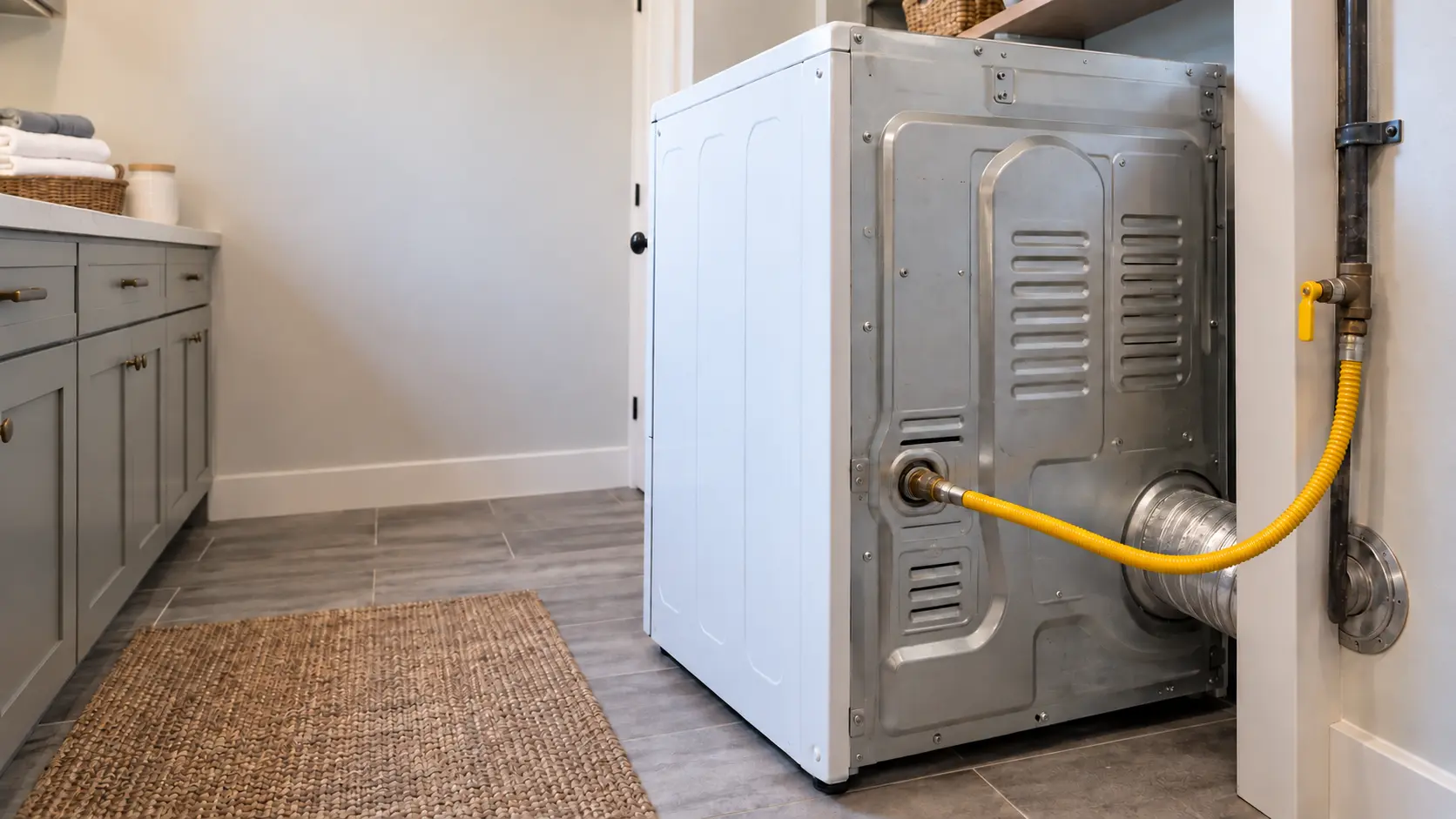
Across Los Angeles County, the four problems where fire or gas is the risk.
All 17 problems


All of
Los Angeles.
Los Angeles County is the county where we repair dryers in Los Angeles.
All of Los AngelesBack to your everyday
Dryer trouble in Los Angeles County?
Book with the town, what you are seeing and the model number — 94 places across Los Angeles County, the same dryer visit in each.