


dryer repair specialists
Dry in one cycle.
We’ll bring
the fix.
Practical help for the dryer your week runs on.
Tell us how the last load came out. We’ll handle the repair.
- No heat and slow drying
- Drums, belts and vents
- Gas and electric
What to expect
Experienced technicians
More than 12 years in appliance repair
Upfront pricing
The cost of the repair in writing, before any work begins
OEM parts on order
Original manufacturer parts ordered against your model number, never third-party substitutes
Warranty on our workmanship
Every repair is backed by a warranty on the work we performed
Your next step
to a working dryer.
A few details now.
A little less to worry about.
Say what it is doing
Choose the appliance and tell us how the dryer is behaving.
Choose an arrival window
Select the day and the time slot that fit your schedule.
Share your details
Add the address and the best number to reach you before the visit.
The brand and model number are usually on a label inside the door opening. They tell us which dryer we are coming to fix.
or call (844) 314-5837
Loading appointment form…
The appointment form couldn’t load. Please try again.
Four steps,
and no surprises.
The three steps in the form are how you book. These four are what actually happens once a technician is standing in your laundry room.
Test before touching
The technician runs the dryer, measures what the heat and the drum are actually doing, and checks the lint screen and the vent run before any part is blamed.
The price comes first
You hear which repair it needs and what it will cost before a screw is turned. If a new dryer is the wiser choice, you are told that as well.
The right part
Belts, fuses and common elements travel on the van. A part made for one model is ordered by its model number, so supplying it at booking can save a trip.
Repair and a test load
The repair is finished and the dryer is run through a heated cycle while the technician is there, with the exhaust temperature and the airflow checked, not assumed.
Not every dryer
breaks the same way.
A gas dryer has a burner and a flame sensor, a stacked pair shares a frame with its washer, and a ventless one condenses its moisture instead of blowing it outdoors. Find the one you own.
All dryer types
Electric dryer
The most common dryer in US homes: a 240-volt heating coil, a belt-driven drum and a vent to the outside.
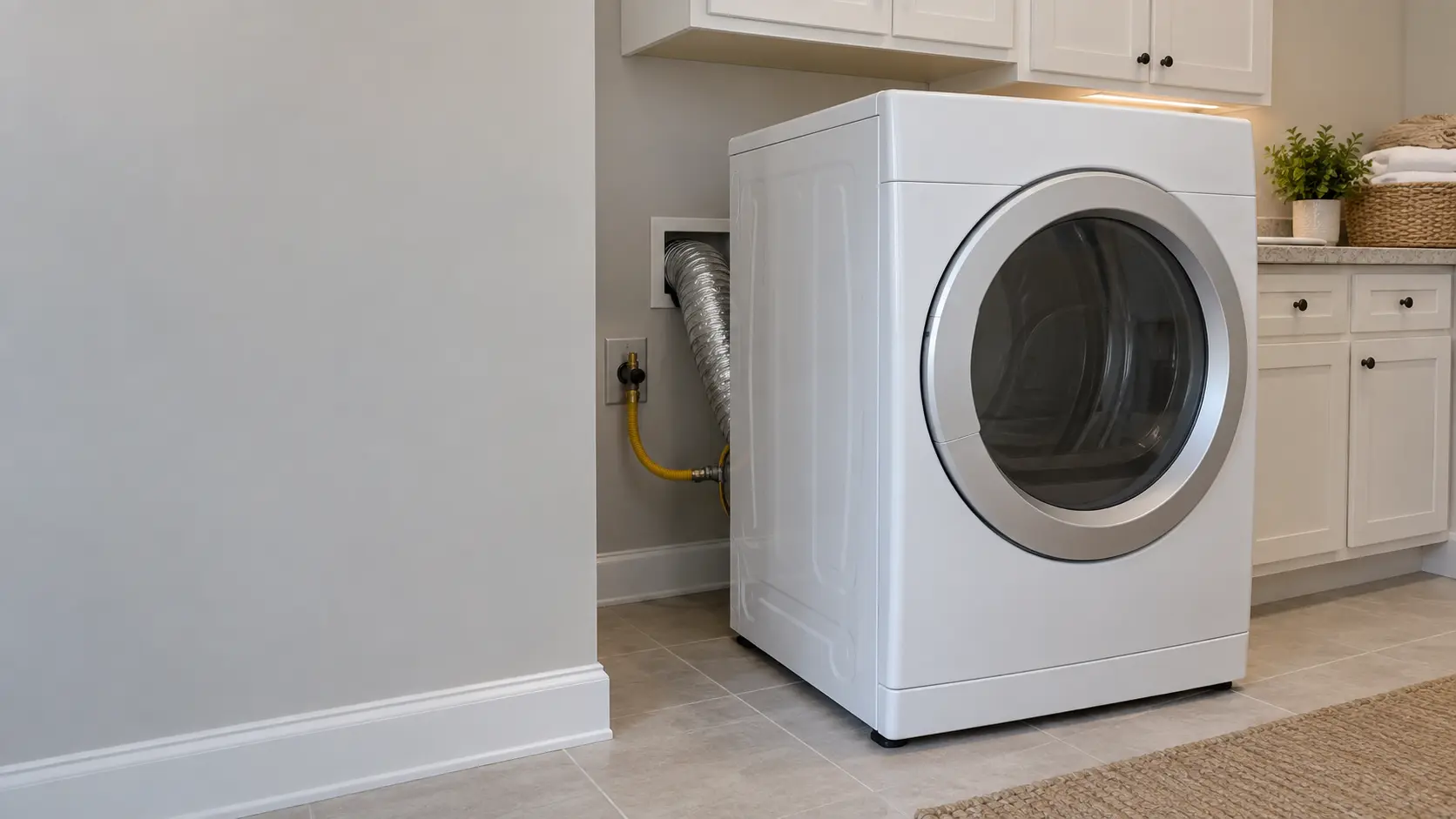
Gas dryer
Heat from a burner on natural gas or propane, lit by an igniter and watched over by a flame sensor, with the motor on 120 volts.

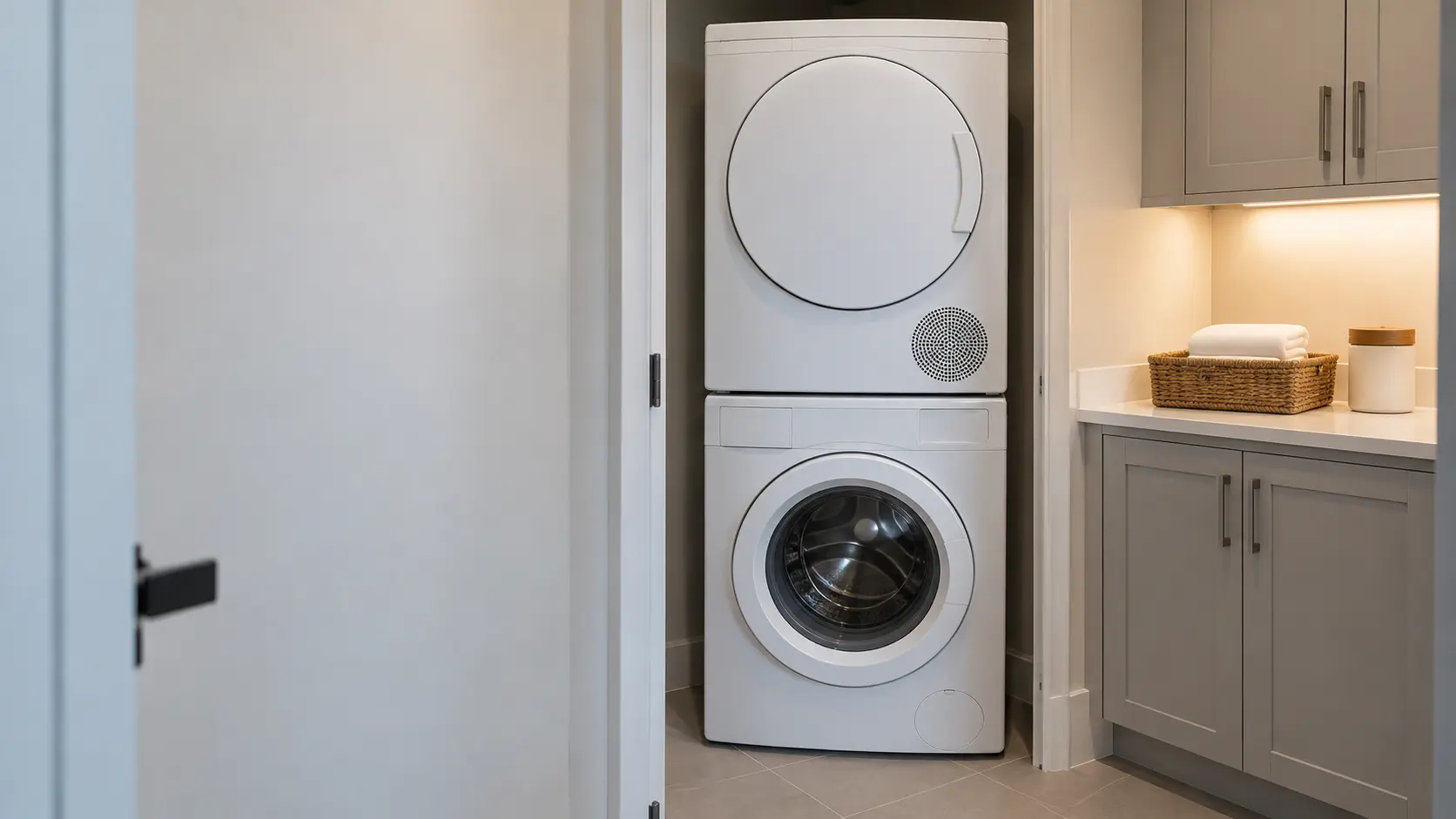
Stackable dryer
The dryer half of a stacked pair or a single-frame laundry center, where the height and the closet decide how the repair is done.
Ventless dryer
Heat-pump and condenser dryers, including 24-inch compacts, that take the water out of the air instead of blowing it outside.
Every kind we serviceAll dryers, side by side
The archive puts the 4 types against each other: how to tell which you own, what fails on each, and which manufacturers build them.
How to tell yoursWhat fails on eachWho makes them Open the type archiveA dryer that heats.
A laundry room that stays safe.
From damp towels after a full cycle to a drum that will not turn, begin with what the last load came out like. Every page says what that usually points to before it suggests booking.
 All 17 problems
Dryer Burning Smell
A hot, scorched or electrical smell from the drum, the cabinet or the vent outside while the dryer runs.
Dryer Smells Like Gas
The dryer smells like gas: a rotten-egg odor near a gas dryer at startup, during a cycle, or all the time.
Dryer Overheating
The cabinet, the door or the clothes come out far hotter than normal, sometimes before the dryer shuts itself off.
Dryer Tripping Breaker
The breaker for the dryer trips at startup, when the heat comes on, or at random during a cycle.
Dryer Not Heating
The drum turns and the cycle runs, but the air stays cool and the clothes come out damp.
Dryer Takes Too Long to Dry
Loads that used to dry in one cycle now need two, or come out damp at the seams.
Familiar brands. Expert care.
For the brands
in your laundry room.
Independent repair service. Not affiliated with, authorized or endorsed by any manufacturer. Brand names and model numbers are the property of their respective owners and are used here for identification only, to describe the appliances we service.
What a repair
usually costs.
A workable test: compare the repair with the cost of a new dryer that fits the same space and hookup. A basic full-size vented dryer is simple to replace, so a motor on a worn-out machine may not be worth it. A stacked pair sized to its closet, a gas unit, or a heat-pump dryer is harder and costlier to match, and that keeps most repairs on them worth doing.
| Repair | Relative cost | Notes |
|---|---|---|
| Vent cleaning and inspection | lowest | Not a repair at all, and the visit that stops the largest share of the heat failures below it. |
| Door switch, catch or hinge | lowest | A dryer that ignores the start button with the door shut often ends at this small switch. |
| Thermal fuse or thermostat | low | Inexpensive parts, priced together with clearing the restriction that made them trip. |
| Heating element | low | The usual answer when an electric dryer tumbles with cold air and both breaker legs are on. |
| Igniter, flame sensor or gas valve coils | low | Most no-heat calls on a gas dryer end at one of these three, once the gas supply is confirmed. |
| Drum belt, idler pulley, rollers or glides | low | Squeals, thumps and a still drum. Worn rollers are normally done as a pair while the drum is out. |
| Control board, timer or moisture sensor | moderate | Priced against the model, and tested against its inputs first, since dirty sensor bars imitate a failed board. |
| Condensate pump, condenser or heat-pump system | moderate | Pumps and seals sit low on the scale; a heat-pump compressor is the one ventless job that reaches the top. |
| Drive motor or blower wheel | highest | The largest part in most vented dryers, and the repair where the dryer's age and drum condition decide the answer. |
9 metros,
one appliance.
The house around a dryer shapes how it wears: how long the vent run is, where it exits, how damp the air is. These notes are about drying in each place, not about the place itself.
All service areasTampa BayFL · 31 areas
Tampa Bay's warm, humid air means laundry comes out of the washer wetter and dryers run longer for most of the year, with damp lint building in the vent faster than it would in a dry climate. Houses near the water add salt at the exterior hood and storm-season power trouble at the controls.
OrlandoFL · 30 areas
Orlando's newer houses often put the laundry in an interior room with a long attic vent to the roof, and those runs are the hidden reason many dryers slow down. Vacation homes and rentals add heavy towel loads in season and long idle stretches in between.
Miami / South FloridaFL · 47 areas
Humidity is the constant in every South Florida dryer call: laundry holds more water, cycles run longer and lint clings to the duct. Most homes here are electric, many towers use ventless or building-vented dryers, and seasonal owners often find a problem months after it began.
New York MetroNY · 75 areas
New York is the hardest place on this list to vent a dryer. Many buildings forbid new exhaust openings, so ventless condenser and heat-pump models are common in renovated apartments, while houses in the outer boroughs keep basement dryers with long runs to the yard.
HoustonTX · 36 areas
Houston's humidity keeps laundry heavy and indoor air damp for much of the year, so dryers run long cycles and vents collect lint quickly. Gas and electric hookups are both common here, and storms that cut the power can leave a dryer with control trouble once it returns.
ChicagoIL · 50 areas
Chicago dryers live mostly in basements, and gas is common wherever the house has service. The vent usually exits near the ground, so snow, leaves and animal nests all take a turn at blocking it, and a slow or overheating dryer is often cured outside the house.
Los AngelesCA · 95 areas
Across Los Angeles the dryer is very often in the garage, frequently gas-fired and vented through the garage wall. That arrangement is simple to service, but dust, pet hair and outdoor grit reach the machine far more easily than in an indoor laundry room.
San DiegoCA · 31 areas
San Diego dryers often sit in garages or small hallway closets, and in the mild climate laundry dries quickly as long as the vent is clear. Near the coast damp air and salt reach the exterior hood, while newer inland houses tend to put the laundry upstairs at the end of a longer duct.
San Francisco Bay AreaCA · 74 areas
Across the Bay Area, dryers range from gas machines in older houses to compact ventless units in flats that were never built with a laundry room. Tight closets, long improvised vents and a steady move toward electric and heat-pump models all shape what a dryer repair looks like here.

Answers before
you book.
How soon can someone look at my dryer?
Do you service my make of dryer?
What should I have ready before the visit?
What will fixing it cost?
Is my dryer worth repairing?
My dryer runs but the clothes stay damp. Is that serious?
Work out what
you are dealing with.
Split by what you are trying to find out rather than by what part of the appliance it concerns.
All 18 guides


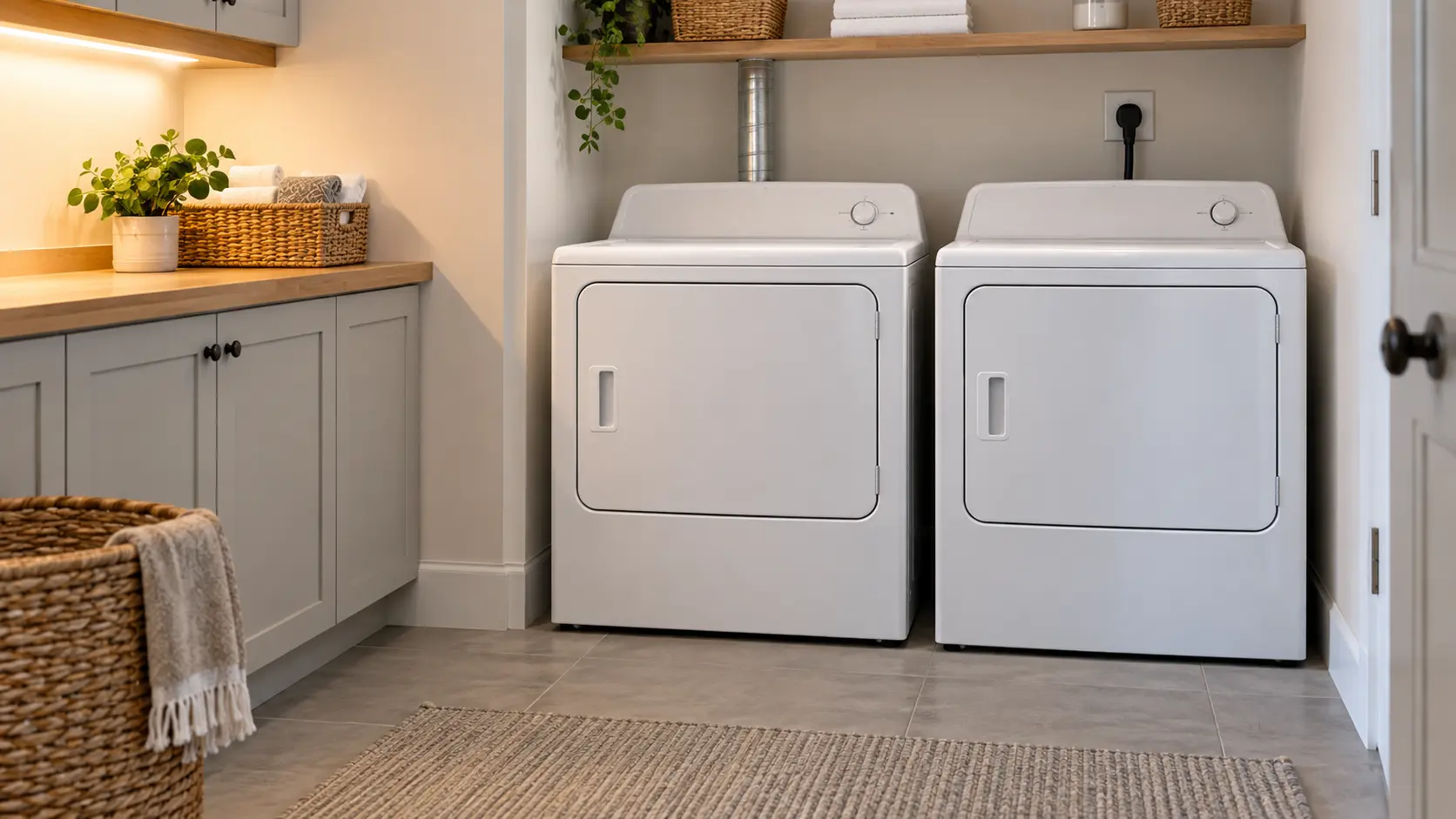

Curious what a repair costs? That has a page of its own rather than a section here, because nobody can name a fair figure before a technician has opened the dryer — dryer repair cost.
Back to your everyday
Let’s get your dryer working again.
Three short steps, a window that suits you, and a price for the actual repair before any work starts.