
Dryer Burning Smell
Usually turns out to be
What to check first
What we do
Ten repairs we take on. Every repair gets a page to itself: what the work involves, where it falls on cost, and when spending money on an aging dryer no longer adds up.
Mon–Sat, 8am–8pm
Book a visit
Three short steps, about a minute.
or call (844) 314-5837
Loading appointment form…
The appointment form couldn’t load. Please try again.
Familiar brands. Expert care.
Independent repair service. Not affiliated with, authorized or endorsed by any manufacturer. Brand names and model numbers are the property of their respective owners and are used here for identification only, to describe the appliances we service.
In the order it gets done: the cheapest cause first, and the expensive answer at the bottom where it usually belongs.
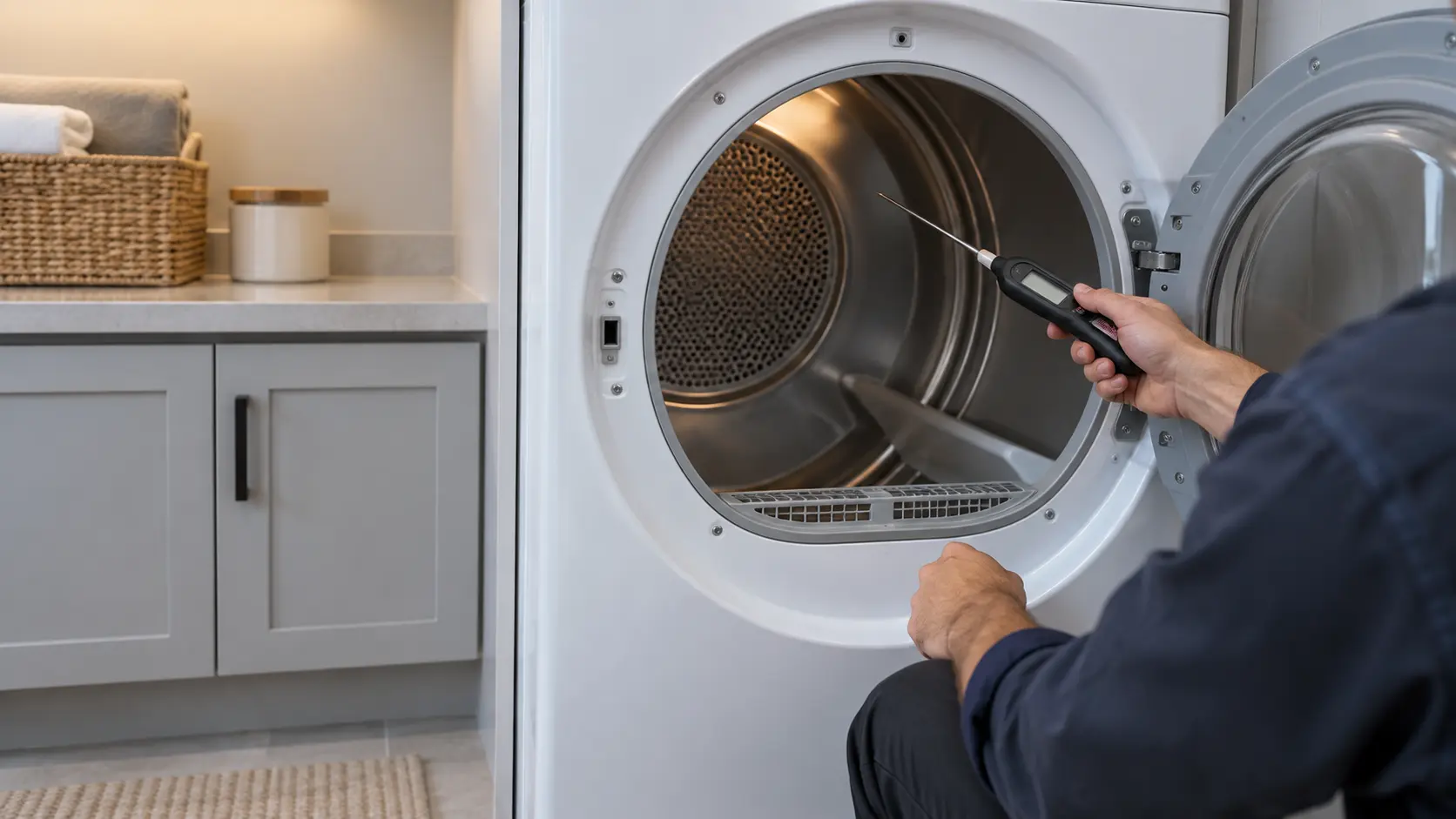
One visit that turns damp clothes, a silent drum or a hot smell into a named part and a price.
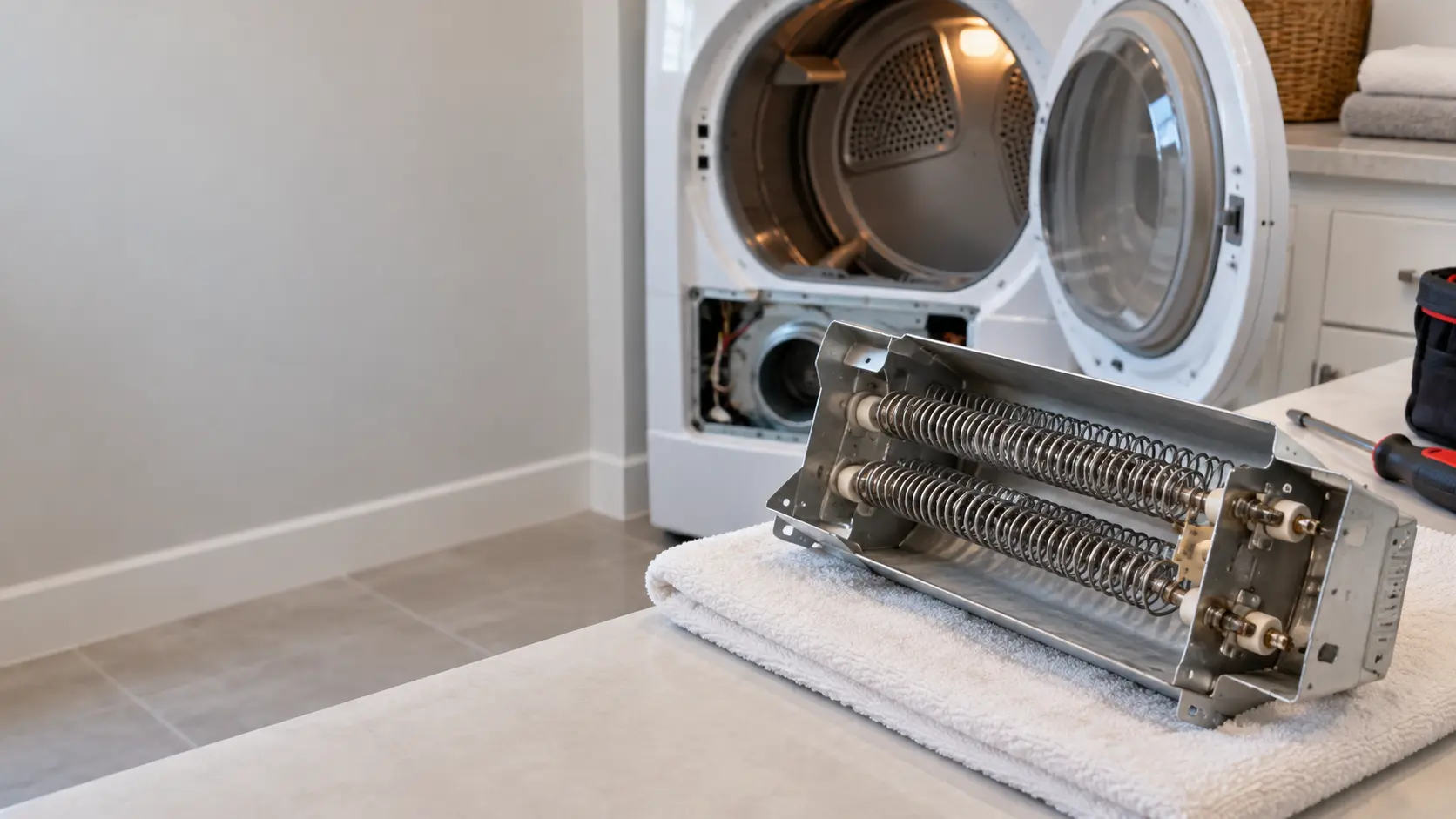
No heat or weak heat on an electric dryer, traced to the coil, its terminals or the safety parts on its housing.

A gas dryer that tumbles without heat, or heats and quits, repaired at the igniter, the flame sensor or the valve coils.
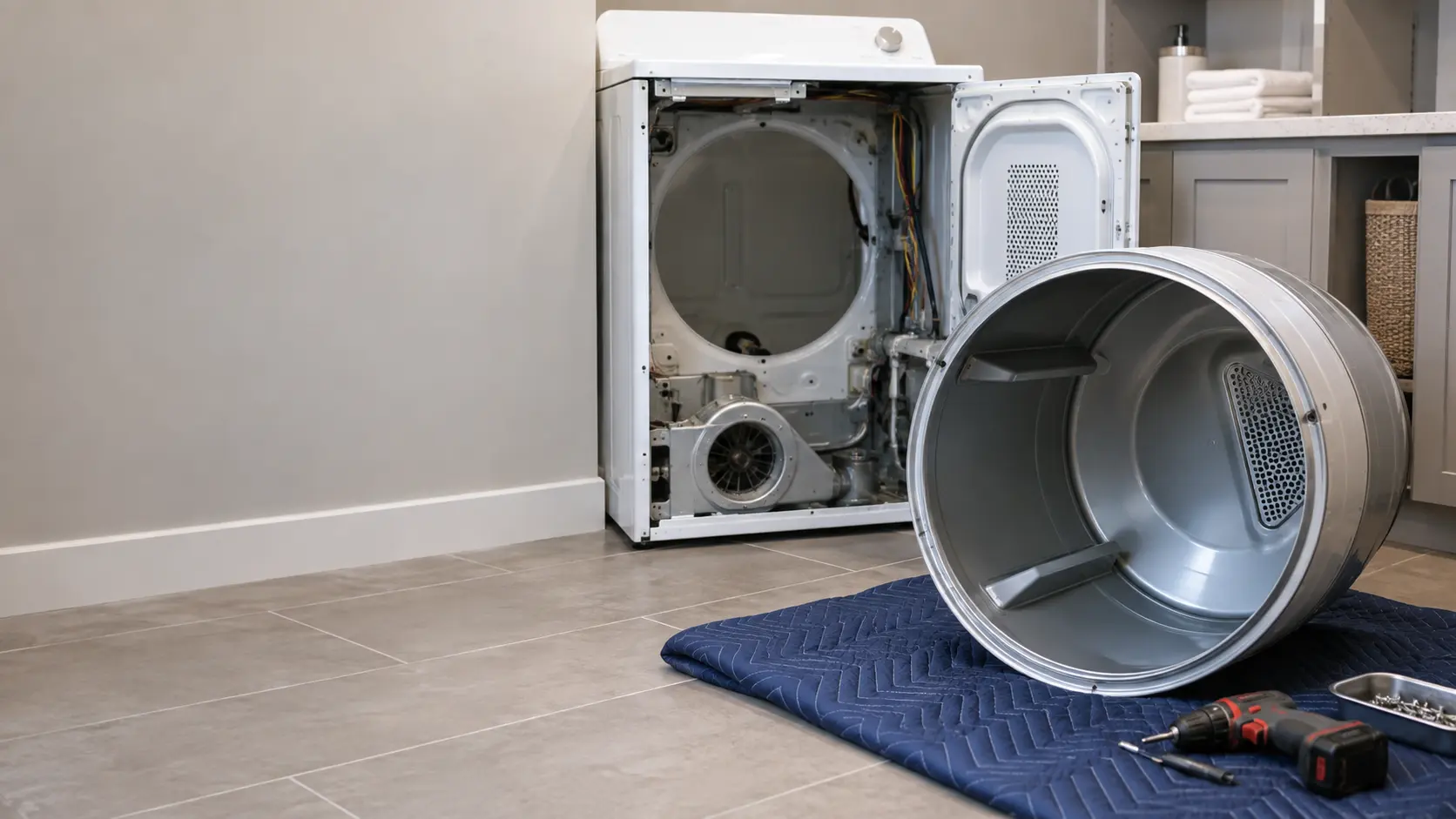
A drum that will not turn, or turns with a squeal, thump or scrape, repaired at the belt, the idler pulley, the rollers and the glides.

A humming dryer that will not start, a rattle behind the drum, or weak airflow, traced to the drive motor or the blower wheel.
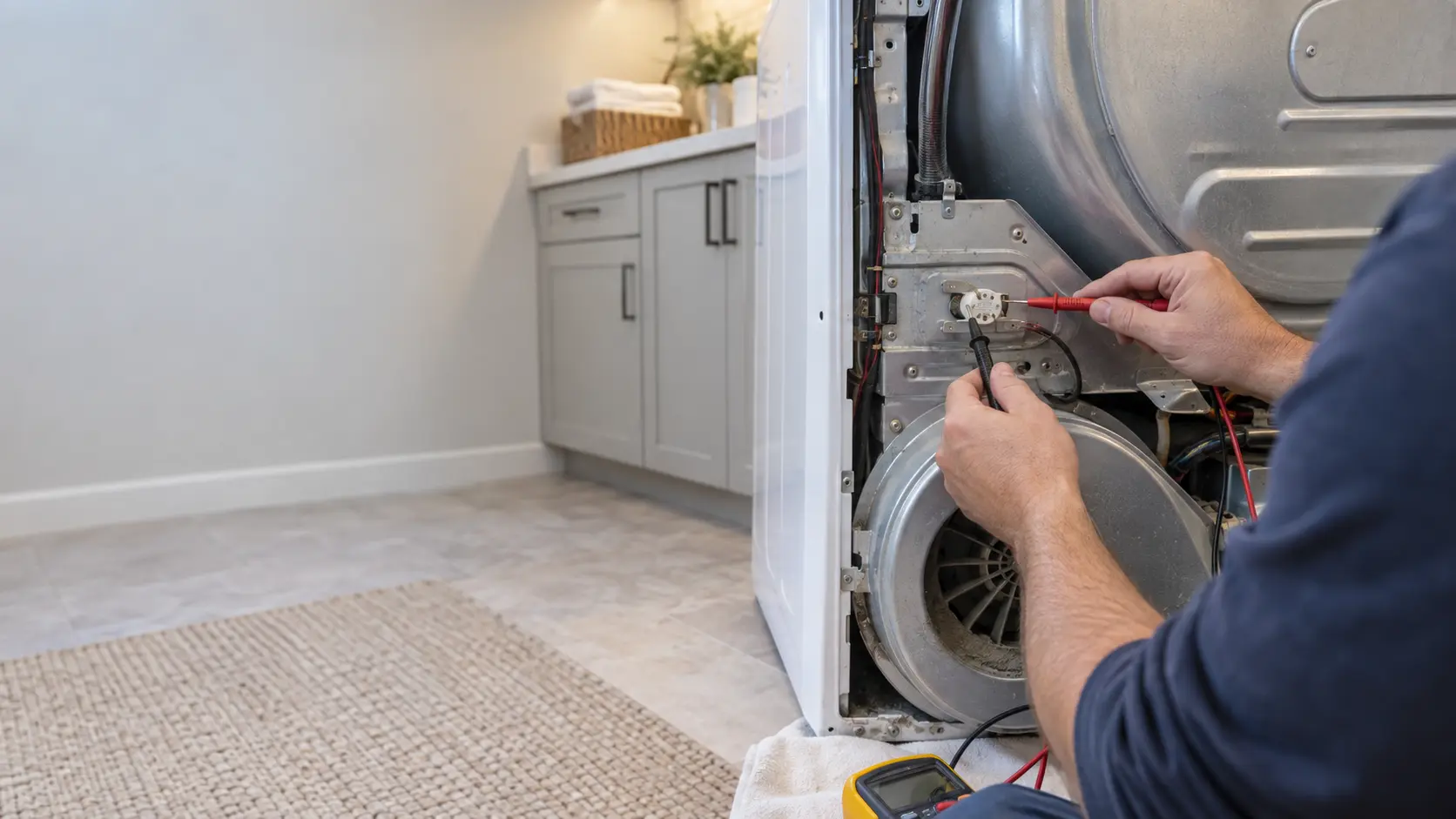
The safety parts that stop a dryer from overheating, replaced after the reason they tripped has been found.

A dryer that ignores the start button with its door shut, or a door that will not stay closed, fixed at the switch, catch or hinge.

A blank display, a panel that ignores buttons, codes, or cycles that end too soon or never end, traced to the board, timer or sensors.

The visit that prevents most dryer fires and many of the repairs above it: the duct, the hood and the lint inside the cabinet.
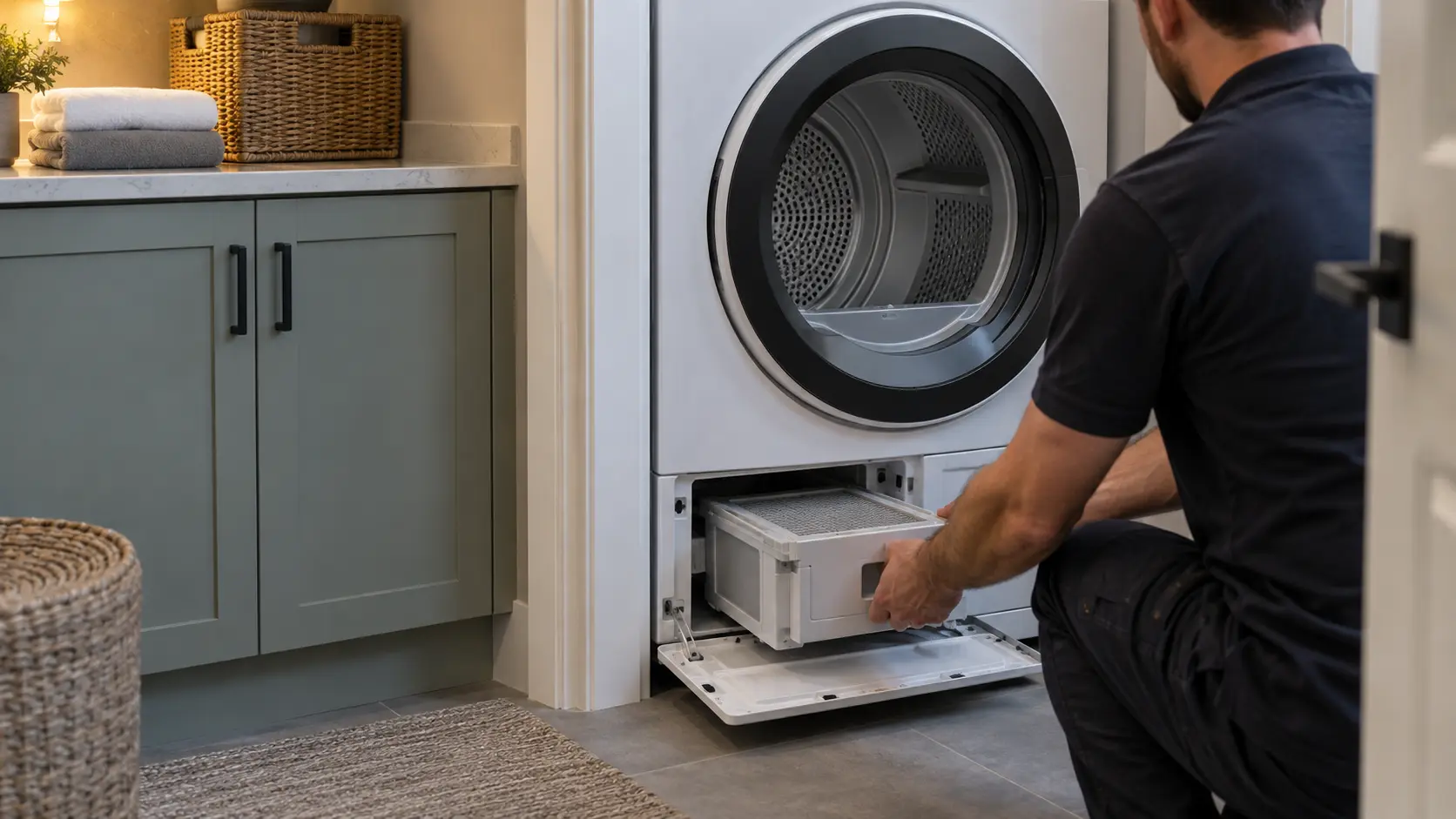
Heat-pump and condenser dryers that leak, stop with a full-tank warning or take hours, repaired at the exchanger, pump and filters.
Before you bookBands rather than prices, because nobody can quote a figure before the dryer has been looked at — and the diagnostic visit that decides it, set against the repair.
10 repairsCheapest firstDiagnostic visit Read the cost guideA workable test: compare the repair with the cost of a new dryer that fits the same space and hookup. A basic full-size vented dryer is simple to replace, so a motor on a worn-out machine may not be worth it. A stacked pair sized to its closet, a gas unit, or a heat-pump dryer is harder and costlier to match, and that keeps most repairs on them worth doing.
| Repair | Relative cost | Notes |
|---|---|---|
| Vent cleaning and inspection | lowest | Not a repair at all, and the visit that stops the largest share of the heat failures below it. |
| Door switch, catch or hinge | lowest | A dryer that ignores the start button with the door shut often ends at this small switch. |
| Thermal fuse or thermostat | low | Inexpensive parts, priced together with clearing the restriction that made them trip. |
| Heating element | low | The usual answer when an electric dryer tumbles with cold air and both breaker legs are on. |
| Igniter, flame sensor or gas valve coils | low | Most no-heat calls on a gas dryer end at one of these three, once the gas supply is confirmed. |
| Drum belt, idler pulley, rollers or glides | low | Squeals, thumps and a still drum. Worn rollers are normally done as a pair while the drum is out. |
| Control board, timer or moisture sensor | moderate | Priced against the model, and tested against its inputs first, since dirty sensor bars imitate a failed board. |
| Condensate pump, condenser or heat-pump system | moderate | Pumps and seals sit low on the scale; a heat-pump compressor is the one ventless job that reaches the top. |
| Drive motor or blower wheel | highest | The largest part in most vented dryers, and the repair where the dryer's age and drum condition decide the answer. |
Most people arrive knowing the symptom, not the repair. These are the jobs each one usually turns out to be, cheapest first — and every one of them starts with the diagnostic visit.
Usually turns out to be
What to check firstUsually turns out to be
What to check firstUsually turns out to be
What to check firstUsually turns out to be
What to check firstUsually turns out to be
What to check firstUsually turns out to be
Usually turns out to be
Usually turns out to be
What to check first
Back to your everyday
Three short steps online, or one call. Tell us what you are seeing and pick a window that works.