


Start with what you own
Dryer
types,
told apart.
Dryers that look alike can be built very differently inside. A gas model lights a burner where an electric one warms coils, a stacked unit has to be reached around the washer it sits on, and a ventless dryer handles its moisture as water rather than exhaust. Knowing which one you have answers much of the question before a technician arrives.
Mon–Sat, 8am–8pm
- 4 types
- Serviced in place
- What each one costs
Book a visit
Three short steps, about a minute.
or call (844) 314-5837
Loading appointment form…
The appointment form couldn’t load. Please try again.
Four types,
each its own job.
Each one is built, reached and repaired differently. Open yours for what fails on it and what the work involves.

Electric dryer
The most common dryer in US homes: a 240-volt heating coil, a belt-driven drum and a vent to the outside.
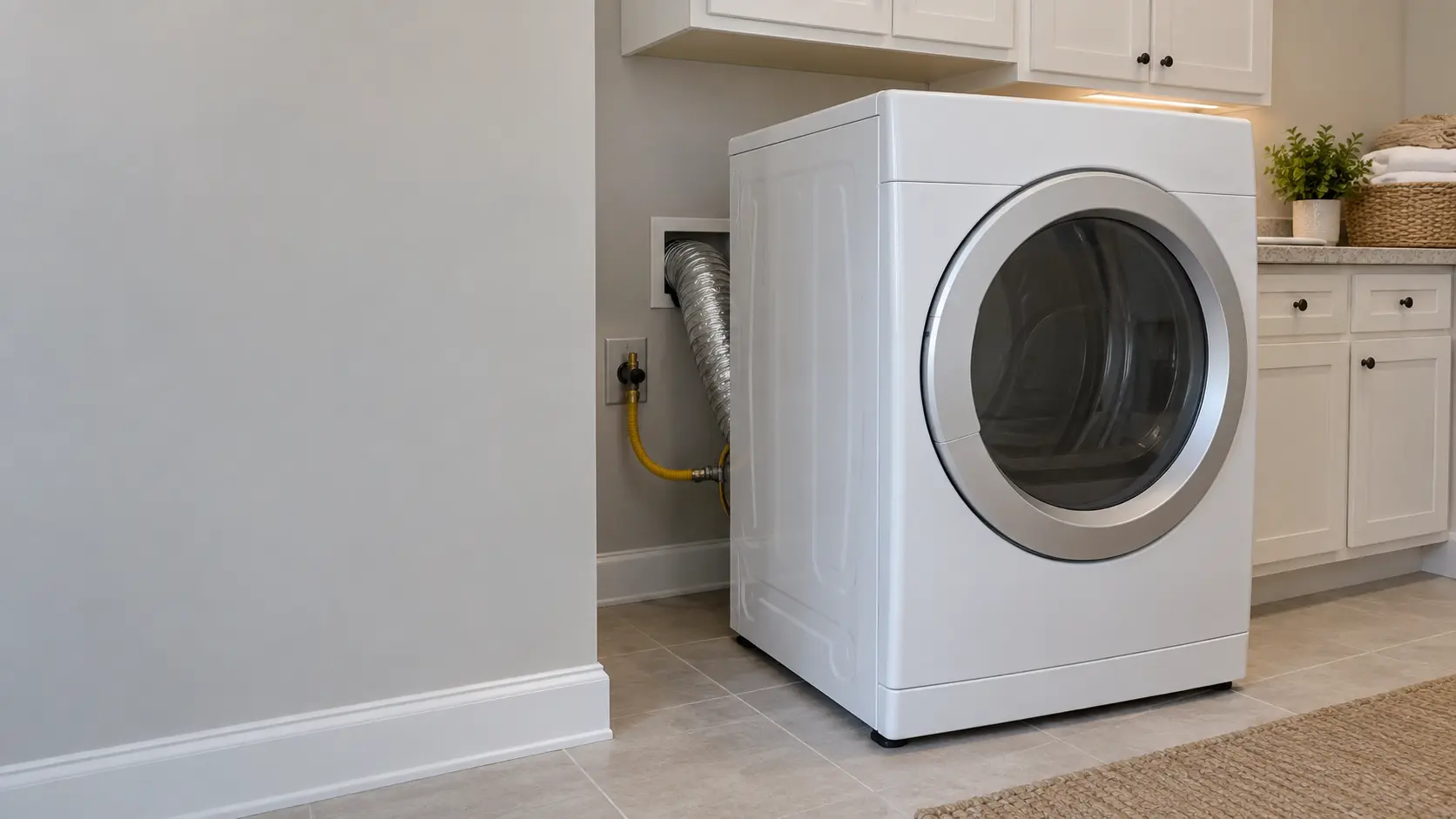
Gas dryer
Heat from a burner on natural gas or propane, lit by an igniter and watched over by a flame sensor, with the motor on 120 volts.

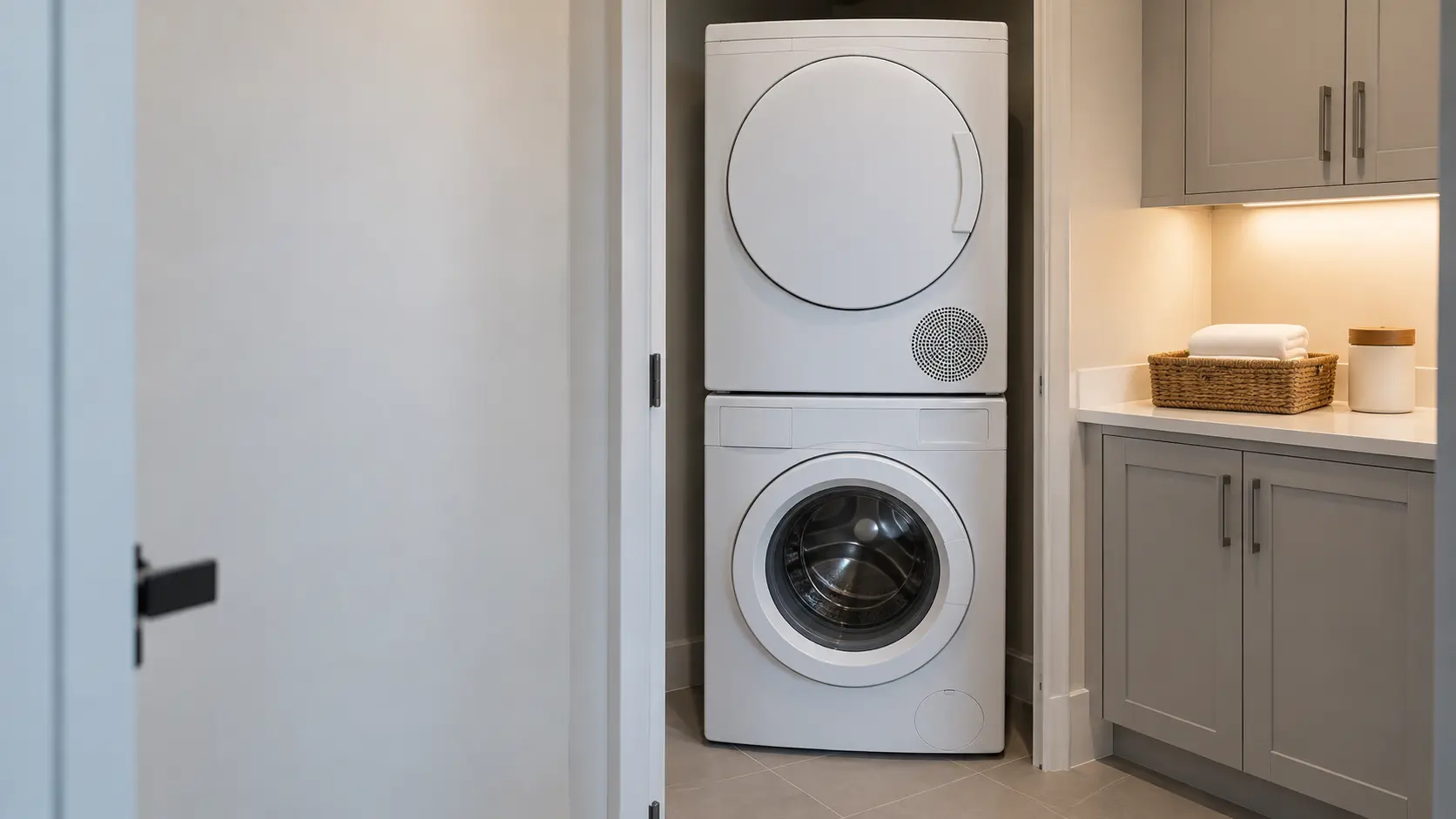
Stackable dryer
The dryer half of a stacked pair or a single-frame laundry center, where the height and the closet decide how the repair is done.
Ventless dryer
Heat-pump and condenser dryers, including 24-inch compacts, that take the water out of the air instead of blowing it outside.
Not sure which you have?Start from what it is doing
If the dryer in your laundry room does not obviously match one of these, work from the symptom instead. It reaches the same answer from the other end.
17 problemsIn order of costWhat to check first Go to the problemsWhich one
is yours?
One look at the dryer usually settles it. The first sign of each type is on the right; its page has the rest, and what that type means for a repair.
Gas, electric or ventlessElectricElectric dryer
The plug is large, with three or four heavy prongs, and it goes into a wall outlet bigger than an ordinary one.
GasGas dryer
A flexible yellow or stainless gas connector runs from a shut-off valve on the wall to the back of the dryer.
StackableStackable dryer
The dryer door is at eye level, above a second appliance, rather than at knee height.
VentlessVentless dryer
There is no vent duct behind the dryer, only a power cord and sometimes a small drain hose.
What a repair
usually costs.
A workable test: compare the repair with the cost of a new dryer that fits the same space and hookup. A basic full-size vented dryer is simple to replace, so a motor on a worn-out machine may not be worth it. A stacked pair sized to its closet, a gas unit, or a heat-pump dryer is harder and costlier to match, and that keeps most repairs on them worth doing.
| Repair | Relative cost | Notes |
|---|---|---|
| Vent cleaning and inspection | lowest | Not a repair at all, and the visit that stops the largest share of the heat failures below it. |
| Door switch, catch or hinge | lowest | A dryer that ignores the start button with the door shut often ends at this small switch. |
| Thermal fuse or thermostat | low | Inexpensive parts, priced together with clearing the restriction that made them trip. |
| Heating element | low | The usual answer when an electric dryer tumbles with cold air and both breaker legs are on. |
| Igniter, flame sensor or gas valve coils | low | Most no-heat calls on a gas dryer end at one of these three, once the gas supply is confirmed. |
| Drum belt, idler pulley, rollers or glides | low | Squeals, thumps and a still drum. Worn rollers are normally done as a pair while the drum is out. |
| Control board, timer or moisture sensor | moderate | Priced against the model, and tested against its inputs first, since dirty sensor bars imitate a failed board. |
| Condensate pump, condenser or heat-pump system | moderate | Pumps and seals sit low on the scale; a heat-pump compressor is the one ventless job that reaches the top. |
| Drive motor or blower wheel | highest | The largest part in most vented dryers, and the repair where the dryer's age and drum condition decide the answer. |

Questions about
the types.
How do I tell whether my dryer is gas or electric?
Why does the type matter so much for a repair?
Does a stacked unit cost more to repair?
What should I mention about the installation when booking?
Back to your everyday
Let’s get your dryer working again.
Three short steps online, or one call. Tell us what you are seeing and pick a window that works.