
How lint becomes a fire
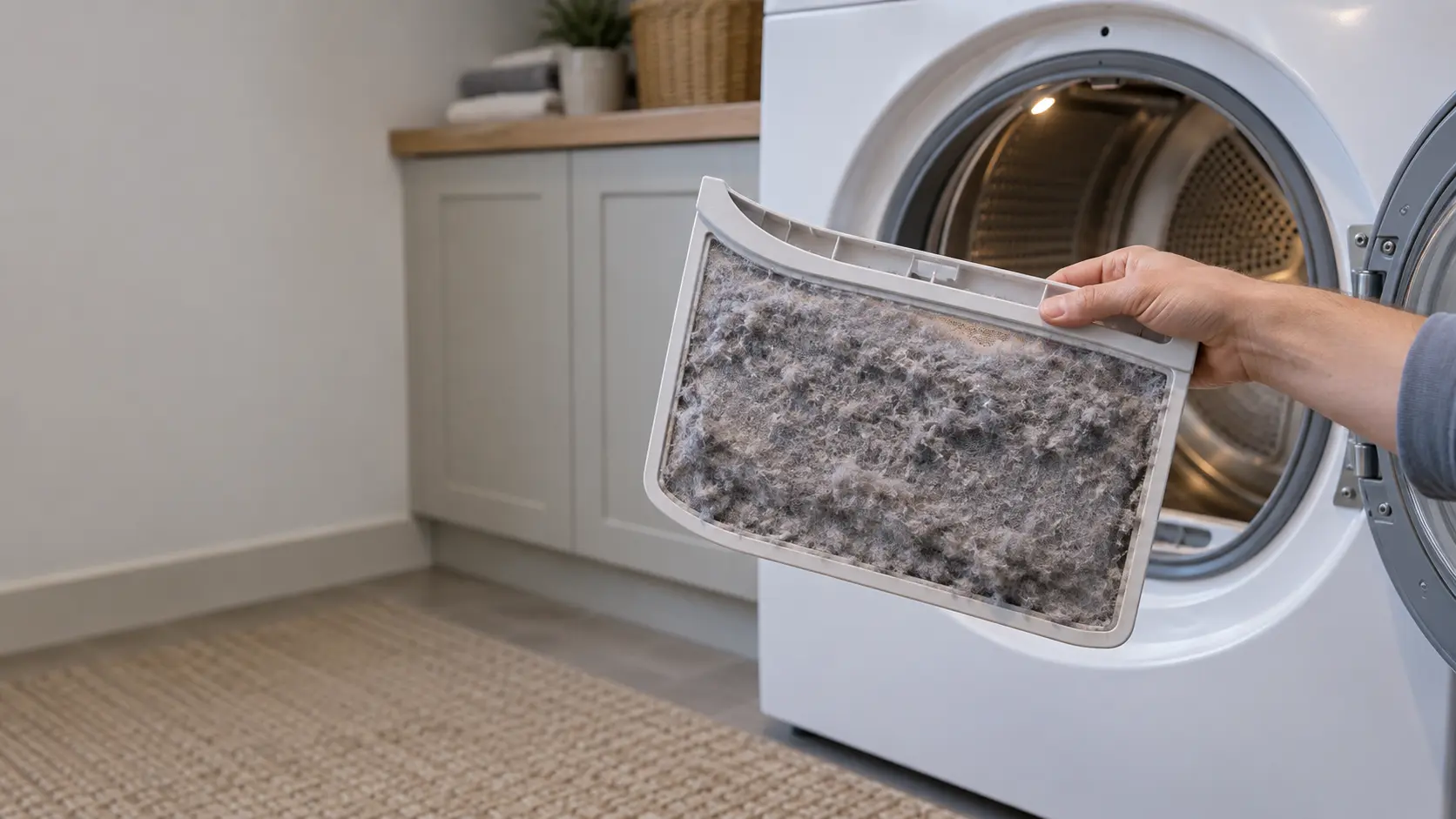
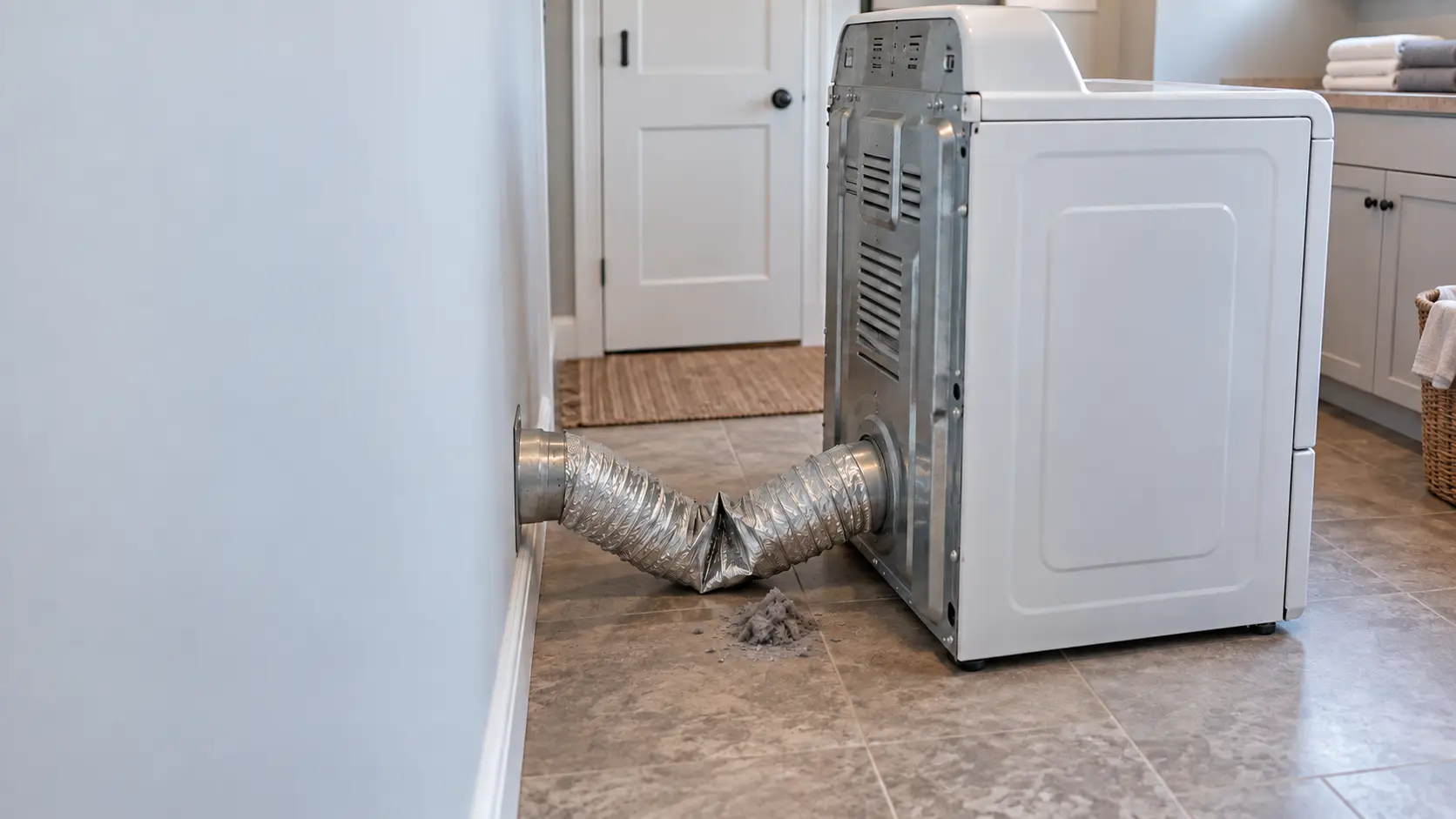
Every load sheds fiber, and most of it is caught by the screen. What gets past the screen travels with the hot, humid exhaust into the duct, where it sticks to seams, sags and the flap of the outside hood. As that layer thickens, less air leaves the drum, the air that stays behind gets hotter, and the dryer's heat source keeps running to finish the cycle.
The U.S. Fire Administration reports that failure to clean was the leading factor in home clothes dryer fires from 2018 to 2020, at 31%. That is why nearly every warning sign in this guide comes back to the same thing: air that cannot get out.
Where lint collects out of sight
The screen is only the first stop. Lint also builds up in the housing the screen slides into, around the blower wheel, under the drum and along the floor of the cabinet, where the heating element or the gas burner sits close by. CPSC recommends having a qualified service person clean the inside of the chassis from time to time for exactly this reason.
Why the duct run matters
A long run, several elbows or a crushed foil connector behind the machine all slow the air down, and slow air drops its lint sooner. A run that was fine for years can become a problem after the dryer is pushed back against the wall during a remodel.
Source: U.S. Fire Administration — Appliance and electrical fire safety — Failure to clean (31%) was the leading factor in home clothes dryer fires, 2018–2020; CPSC — Overheated Clothes Dryers Can Cause Fires (Publication 5022) — Lint blocks airflow and builds heat; damp loads or long cycles signal a blocked screen or duct; care with clothes soiled by volatile chemicals
The warning signs, roughly in the order they appear
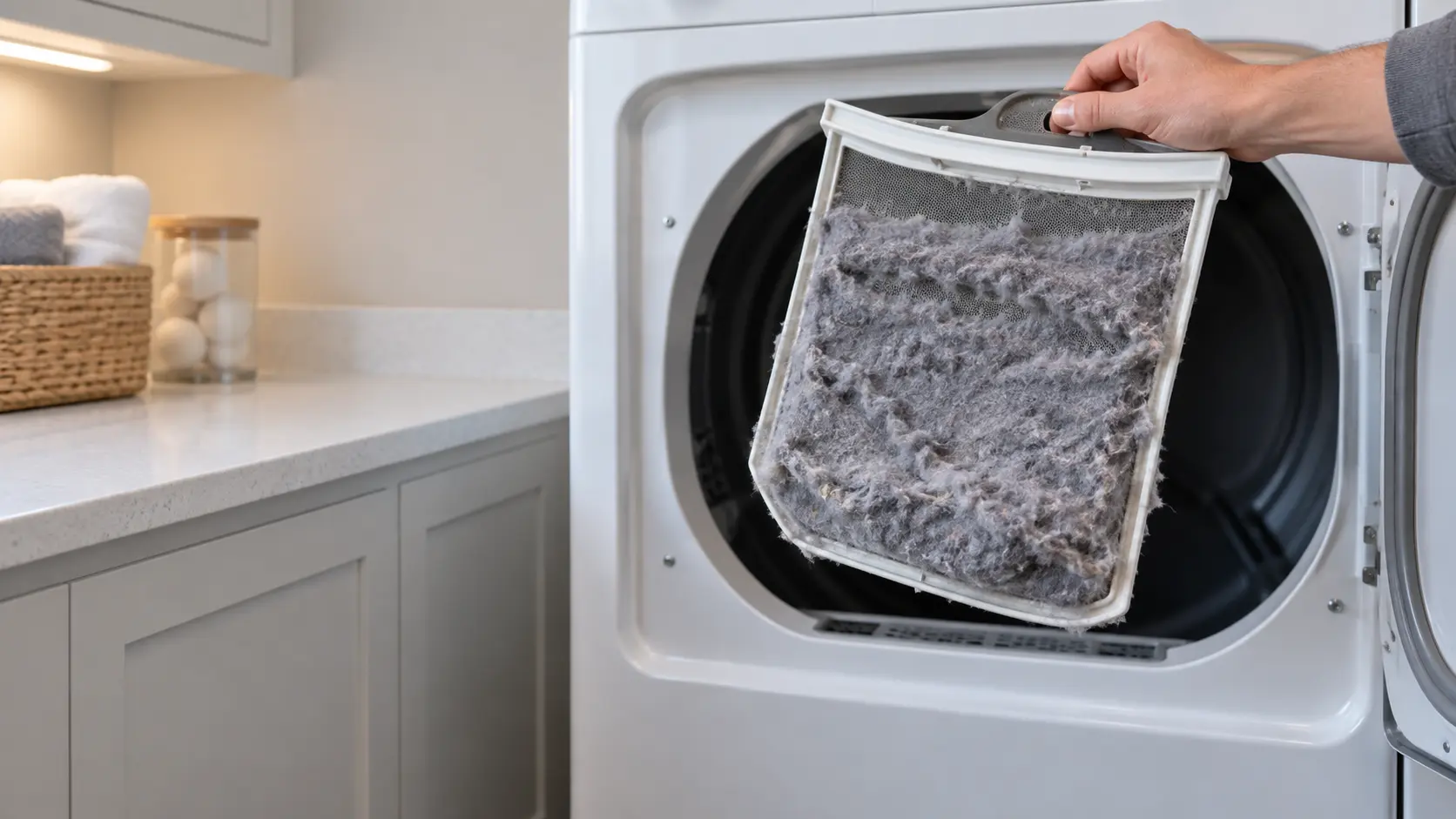
Most households notice the first two and put them down to a big load or a humid day. Taken together, these dryer fire warning signs are the machine describing its own airflow, and the later ones on the list call for the dryer to stay off until someone has looked.
- Towels or jeans still damp after a cycle that used to finish them.
- The top of the cabinet, the door or the clothes themselves feel much hotter than usual at the end.
- The laundry room becomes warm and humid while the dryer runs.
- Outside, the hood flap barely lifts or hardly any air comes out.
- Lint gathers on the floor behind the machine or around the door opening.
- A "check vent" or airflow indicator lights up, on models that have one.
- A hot, dusty or scorched smell during the cycle or just after it.
What each sign points to
Long cycles and damp loads are the mildest form of the problem. CPSC treats them as a sign that the screen or the exhaust duct is blocked, and a clean screen with no change points further down the run.
Heat you can feel
A cabinet that is hot to the touch means the heat is staying inside the machine. The dryer has high-limit thermostats and a thermal fuse to cut the heat when that happens, but they are a last line of defense, not a cleaning schedule.
A smell
Burning dust on a first use after months idle can happen once and fade. A scorched smell that returns load after load, or one that smells of hot plastic or wiring, means stop using the dryer until it has been opened up and inspected.
A vent indicator
Some dryers watch their own exhaust and light a warning when it is restricted. GE's instructions, for example, point to a full lint filter, kinked or blocked ducting, or an outside damper that does not open freely, and ask you to dry a load on an automatic cycle to see whether the light clears.
Source: CPSC — Overheated Clothes Dryers Can Cause Fires (Publication 5022) — Lint blocks airflow and builds heat; damp loads or long cycles signal a blocked screen or duct; care with clothes soiled by volatile chemicals; GE Appliances — Dryer Owner's Manual and Installation Instructions (49-3000386) — A check-vent light points to a full filter, kinked or blocked ducting or a stuck outside damper
Loads that raise the risk
Some fires start in the laundry rather than in the lint. Rags and clothes soaked with gasoline, cooking oil, cleaning agents or wood stains and finishing oils can heat on their own once dried. CPSC advises washing them more than once, hanging them to dry where possible, and otherwise using the lowest heat and a cycle that ends with a cool-down.
The same guidance warns against leaving freshly dried items of that kind in the drum or heaped in a basket, where the heat has nowhere to go. Kitchen towels and a mechanic's work clothes are the usual examples.
Source: CPSC — Overheated Clothes Dryers Can Cause Fires (Publication 5022) — Lint blocks airflow and builds heat; damp loads or long cycles signal a blocked screen or duct; care with clothes soiled by volatile chemicals
Habits that remove the fuel
NFPA's tip sheet keeps the list short, and each item takes a minute:
- Clean the lint filter before or after every load, and never run the dryer without it.
- Clean the vent pipe once a year, sooner if drying times are creeping up.
- Check that the outdoor flap opens, and that snow or a shrub is not covering it.
- Keep boxes, cleaning supplies and piles of clothing away from the dryer.
- Turn the dryer off before going to bed or leaving the house.
Source: NFPA — Clothes Dryer Safety tip sheet — Clean the filter every load, clean the vent yearly, check the outdoor flap, keep combustibles away, turn the dryer off when leaving or sleeping


