


Dryer
Vent Cleaning and Inspection
The visit that prevents most dryer fires and many of the repairs above it: the duct, the hood and the lint inside the cabinet.
Mon–Sat, 8am–8pm
- Lowest cost band
- 5 steps on the visit
- 4 problems it answers
Book a visit
Three short steps, about a minute.
or call (844) 314-5837
Loading appointment form…
The appointment form couldn’t load. Please try again.
What the dryer vent cleaning and inspection
involves.
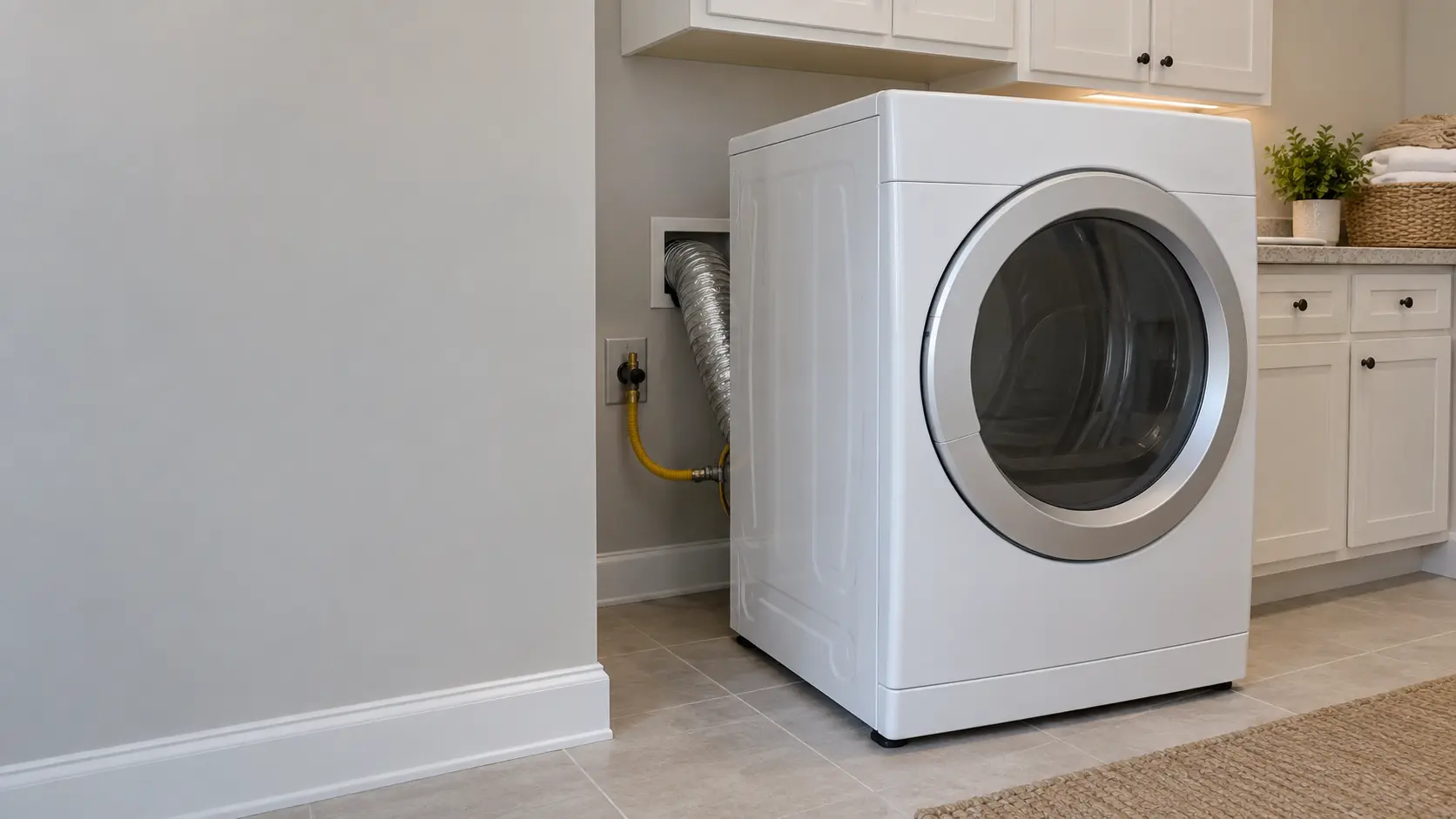
A vented dryer pushes hot, lint-laden air through a 4-inch duct to a hood outside. Lint that escapes the screen settles in the duct, at every bend and behind the hood flap, and as it builds the dryer runs longer and hotter. Lint is the fuel in most dryer fires, and the leading factor in them is a dryer that was never cleaned. Dryer vent cleaning clears the full run, and the inspection looks at what the duct is made of, how long it is and how it is routed.
How the visit goesWhat it usually costsLowest · Vent cleaning and inspection
Not a repair at all, and the visit that stops the largest share of the heat failures below it.
Answers 4 problemsDryer Vent Clogged
Dryer Takes Too Long to Dry · Dryer Overheating · Dryer Burning Smell
Comes up most onElectric dryer
Gas dryer · Stackable dryer
Codes that lead hereE4 · CArE · EF1 · Vent Blocked
Asko dryer showing E4.
Vent cleaning and inspection,
step by step.
Report the length, bends and condition of the vent, and whether it meets the dryer's own limits.
Measure airflow at the outside hood before cleaning, so the improvement can be measured afterward.
Disconnect the dryer and clear the duct end to end with brushes and a vacuum, including the hood flap.
Clean the lint screen housing and the lint inside the cabinet around the heater or burner and the blower.
Replace any plastic or foil duct with rigid or semi-rigid metal, reconnect, and measure airflow again.
Report the length, bends and condition of the vent, and whether it meets the dryer's own limits.
The problems
it answers.
4 of them, from dryer vent clogged to dryer burning smell.
All problems
Dryer Vent Clogged
5 causes, cheapest first
Before you call
Tell us this when you book
- Whether the vent leaves through a wall, the roof or a shared shaft
- Roughly how far the laundry room is from an outside wall
- Whether the outside flap opens when the dryer runs
- When the vent was last cleaned
It also answers
Lowest,
on the site's scale.
Not a repair at all, and the visit that stops the largest share of the heat failures below it.
Read the full cost guideWhere it
comes up most.
Most bookings: Electric dryer, Gas dryer, Stackable dryer.
All dryer types

The makes
we see it on.
14 makes on this site, and the dryer vent cleaning and inspection on any of them. Each mark opens that make's own page.
All 14 brandsVent cleaning and inspection,
where we come out.
The laundry room, the climate and the building all change how the dryer vent cleaning and inspection goes. These notes are about that, metro by metro.
All service areasTampa BayFL · 31 areas
Humid Tampa Bay air makes lint damp and sticky, so it clings to duct walls and builds faster; a vent cleaning here also checks that the exterior flap closes, keeping wet air and pests out of the run.
OrlandoFL · 30 areas
Orlando laundry rooms often vent up through the attic to a roof cap, a long run that is hard to see and easy to forget, and cleaning it restores drying time as well as lowering the fire risk.
Miami / South FloridaFL · 47 areas
In Miami towers, dryer exhaust may run through long horizontal ducts to an exterior wall or into a building riser, and a vent inspection here usually has to be coordinated with building management.
New York MetroNY · 75 areas
Many New York buildings restrict dryer venting, and where an in-unit dryer is allowed to exhaust outside, the path is often long and cramped; the inspection confirms it follows the building's rules and is clear where it leaves the wall.
HoustonTX · 36 areas
Houston houses often vent the dryer through the roof or a long wall run, and a clogged vent is one of the most common reasons a dryer overheats there during the humid months.
ChicagoIL · 50 areas
A Chicagoland basement vent usually exits near ground level, where drifted snow and fallen leaves block the hood in their seasons, so an inspection covers that outlet as carefully as the duct inside.
Los AngelesCA · 95 areas
Los Angeles garage dryers often vent through a short wall run, yet the outside hood still clogs with lint, leaves or nesting birds, and a look outside is often enough to restore airflow.
San DiegoCA · 31 areas
San Diego's newer houses tend to put the laundry upstairs and vent through the roof or a second-floor wall, and a roof cap collects lint that stays out of sight until the dryer begins to overheat.
San Francisco Bay AreaCA · 74 areas
Older Bay Area buildings often have dryer vents that were added through a light well, a crawlspace or a back stair, so the whole path is mapped before cleaning, since some stretches may be foil that needs replacing.

Questions about
the dryer vent cleaning and inspection.
How often should a dryer vent be cleaned?
Is the white foil or plastic duct safe?
Does a clogged vent really cause fires?
Can I clean the vent myself?
Back to your everyday
Ready to book the dryer vent cleaning and inspection?
Have these to hand: whether the vent leaves through a wall, the roof or a shared shaft, roughly how far the laundry room is from an outside wall, whether the outside flap opens when the dryer runs, when the vent was last cleaned.