
What the fuse does
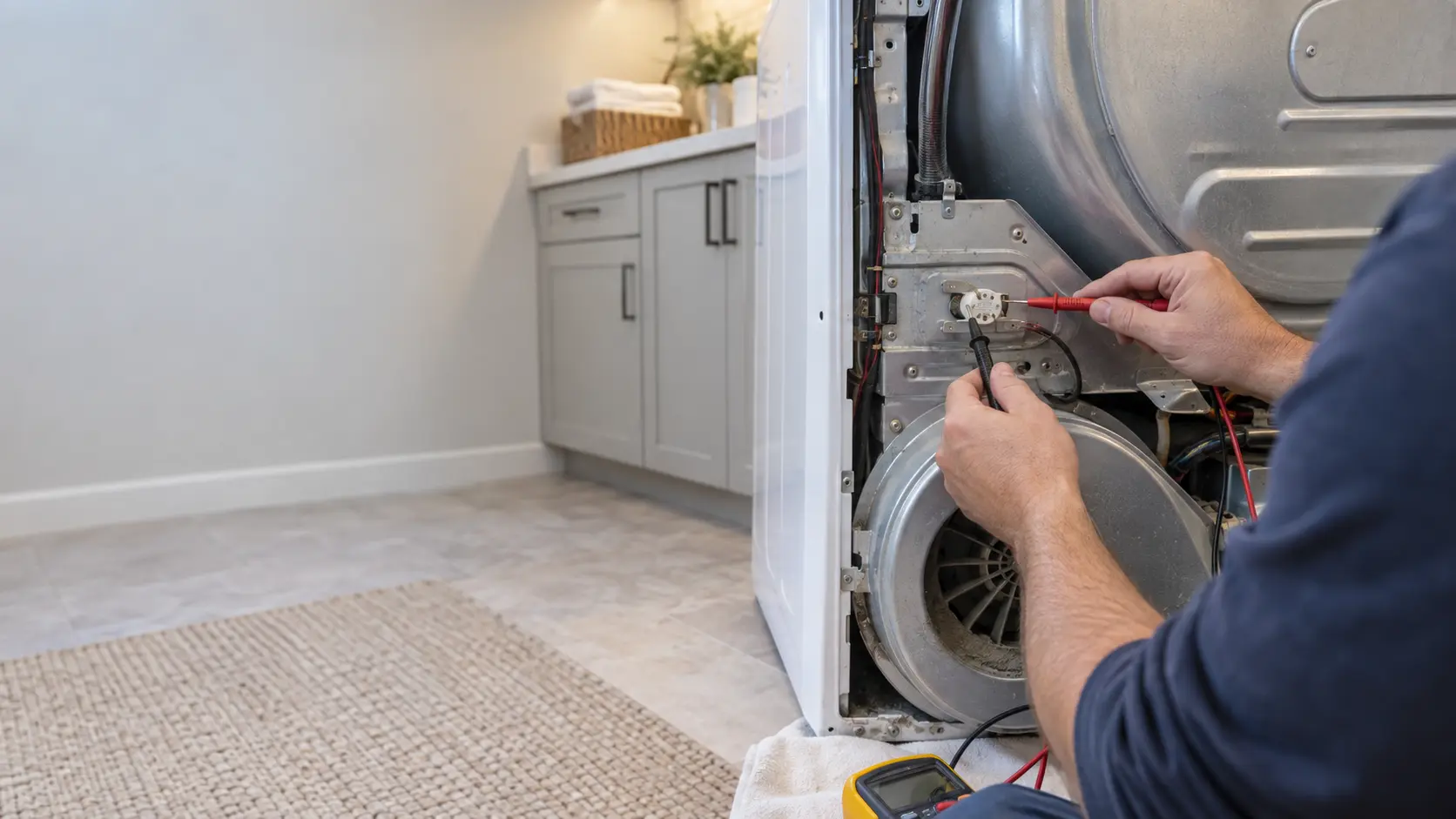
A dryer thermal fuse is a small sealed part, often in a white or black plastic body with two terminals, fastened to the blower housing or exhaust duct inside the cabinet. It sits where the hot air leaves the drum. Below its rated temperature it simply passes current; above it, an internal link melts and the circuit opens for good.
Depending on the design, that open circuit either stops the motor, so the dryer will not start at all, or cuts only the heat, so the drum turns and the load stays cold. The owner's manual or the wiring diagram inside the cabinet shows which one a given model does.
| Part | What it does | After it trips |
|---|---|---|
| Cycling thermostat | Switches the heat on and off to hold the chosen temperature | Closes again as the air cools; this is normal operation |
| High-limit thermostat | Cuts the heat if the heater area runs too hot | Resets itself once it cools |
| Thermal fuse | Opens when exhaust air passes its rating | Stays open; the part must be replaced |
Why it is built not to reset
The resettable parts handle ordinary swings. The fuse exists for the case where they have not been enough, and a part that closed again on its own would restart the heat under the same conditions that opened it. Staying open forces someone to look.
Why it opens
CPSC describes the chain plainly: lint builds up in the dryer or in the exhaust duct, blocks the flow of air, and causes excessive heat. The fuse sits in that air stream, so it is usually the first part to register the problem.
- Lint packed in the screen housing, the blower or the duct.
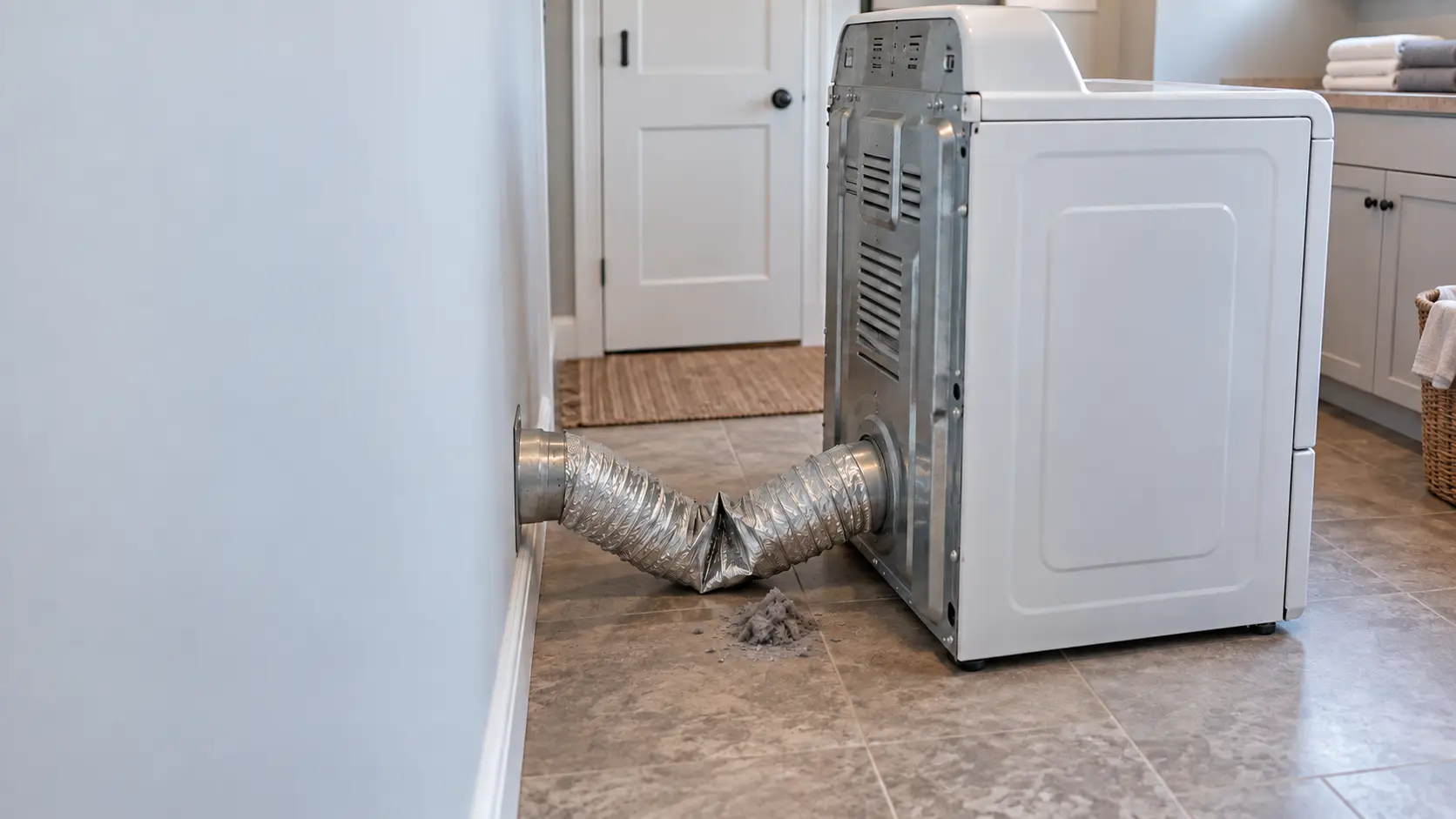
- A foil or plastic connector crushed behind the dryer.
- A duct run longer, or with more elbows, than the installation manual allows.
- An outside hood whose flap is stuck, painted shut or nested by birds.
- A cycling thermostat that no longer opens, or a heating element touching the cabinet.
- A damaged blower wheel that moves less air than it should.
When the installation is the cause
GE's installation instructions warn that exhaust longer than the specified length increases drying times, shortens the dryer's life and collects lint that becomes a fire hazard. A fuse that opens every few months in a dryer with a long or winding vent is usually telling you about the run, not the part.
Can the fuse simply wear out?
Occasionally, on an older dryer with a clean vent and parts that test well. It is the least likely explanation, and it is only reached after everything upstream has been measured and ruled out.
Heavy and bulky loads
A comforter, a sleeping bag or a drum packed to the door leaves little room for air to move through the load. The dryer runs long and hot, and on a vent that was already marginal that can be the load that finally opens the fuse. Drying bulky items one at a time, on the heat the care label allows, keeps the exhaust moving.
Source: CPSC — Overheated Clothes Dryers Can Cause Fires (Publication 5022) — Lint in the dryer or duct blocks airflow and causes excessive heat build-up; GE Appliances — Dryer Owner's Manual and Installation Instructions (49-3000386) — Excess exhaust length lengthens drying, shortens dryer life and collects lint; a dryer may tumble without heat if one of two breakers is tripped

Telling it apart from a tripped breaker
A dead or cold dryer is not always a fuse. An electric dryer runs on two breakers or two fuses at the panel, and GE's troubleshooting table notes that the drum may still turn with no heat if only one has tripped. Reset both before assuming anything inside the machine. On a gas dryer, check that the shutoff valve at the dryer and the main supply are open.
If the breakers are fine, the next clues are the dryer's own: a vent warning on the display, a vent run that has not been cleaned in years, or a cabinet that felt unusually hot in the loads before it quit.
A few checks narrow it down before anyone opens a panel, and none of them needs tools:
- Both breakers for the dryer pushed fully off, then on again, once only.
- The lint screen pulled and cleaned, and the slot it slides into looked at with a flashlight.
- The duct behind the machine checked for a crushed or disconnected section.
- The outside hood watched while the dryer runs on a timed heat cycle: the flap should lift and warm air should push out.
- On a gas model, the handle of the shutoff valve lined up with the pipe, which means open.
Source: GE Appliances — Dryer Owner's Manual and Installation Instructions (49-3000386) — Excess exhaust length lengthens drying, shortens dryer life and collects lint; a dryer may tumble without heat if one of two breakers is tripped
What a proper repair includes
Testing the fuse means unplugging the dryer, opening a panel and measuring continuity across its terminals. The part itself is a small repair. The value of the visit is in the rest of the checklist.
Measuring the airflow
Some manufacturers give a number for it. Speed Queen's installation instructions set a maximum of 0.6 inches of water column static pressure, measured in the duct two feet from the dryer while it runs empty. A reading above that points to the vent, and the fuse is replaced only once the run is cleared or corrected.
Testing the heat parts
The cycling and high-limit thermostats are tested, the heating element is checked for a short to the cabinet, and on a gas model the burner area is inspected for lint. A thermostat that stays closed will open the new fuse on the next load.
Source: Alliance Laundry Systems (Speed Queen) — Installation Instructions for Dryers, D516902 — Exhaust static pressure no greater than 0.6 in. water column, measured 2 ft from the dryer, running empty


