
What the laundry space already decides
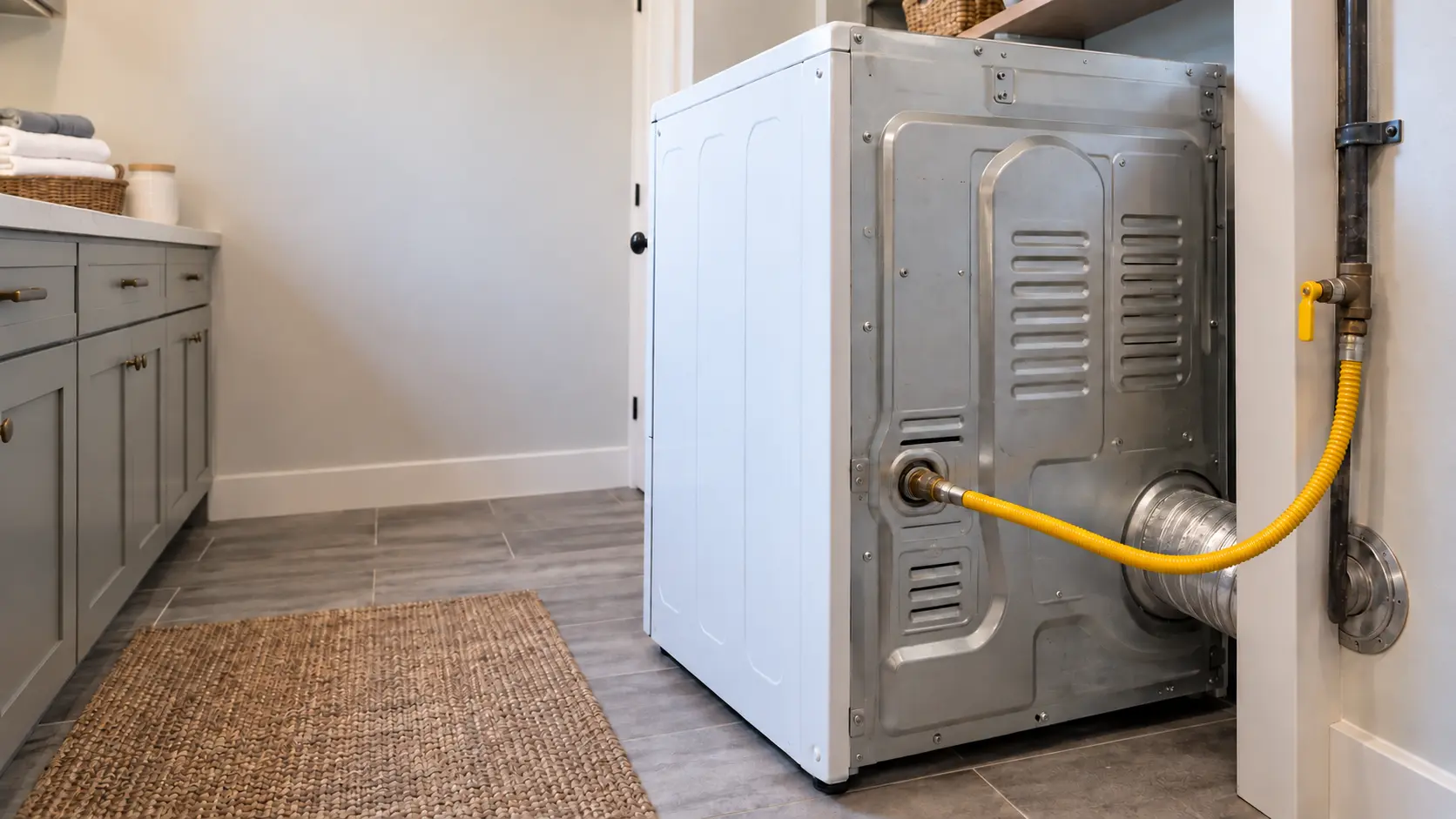
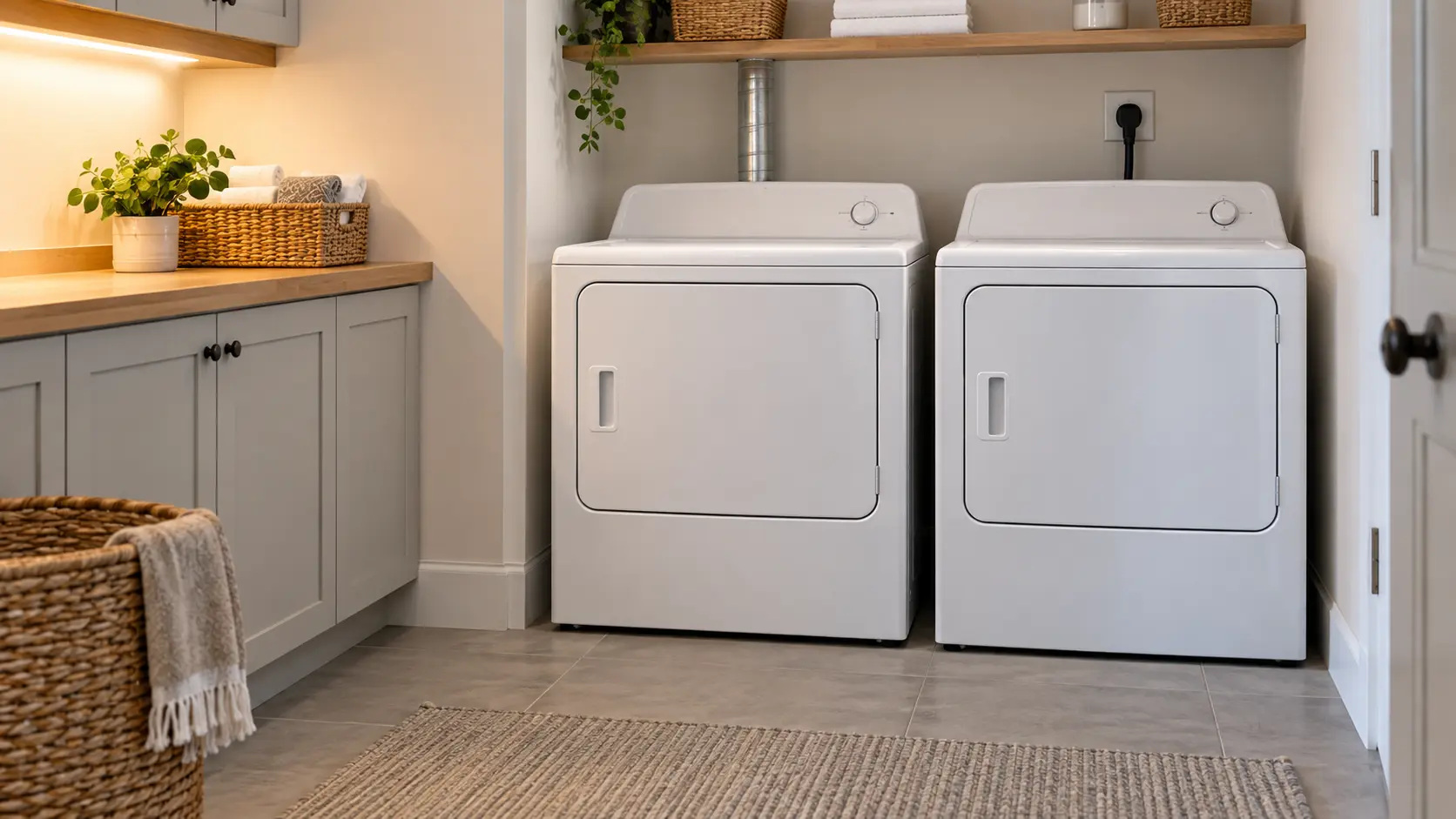
Look behind where the dryer will stand before comparing features. A capped gas pipe with a valve means a gas dryer connects with little more than a new flexible connector. A large three- or four-slot receptacle means a 240-volt electric dryer plugs straight in. A four-inch hole through the wall or floor means either vented type can exhaust properly.
Missing any of those, the job grows. Running a new gas line is work for a gas fitter and often needs a permit. A new 240-volt circuit is electrician's work at the panel. A new exterior vent may be impractical in a condominium or an interior closet, which is exactly where the ventless designs earn their place.
- Gas line and valve present: a gas dryer is the natural fit.
- 240-volt receptacle present: an electric dryer, or a 240-volt heat-pump model.
- Only a standard 120-volt outlet and no vent: a 120-volt heat-pump or compact ventless dryer.
- No outside wall within a short duct run: ventless, or a vent route planned by an installer.
Gas against electric in daily use
Inside the drum the two vented designs behave almost identically. Both blow heated air through the load and out a duct, and both tend to finish a full load of mixed cotton in under an hour when the vent is clear. The difference lies in where the heat comes from and what that means years later.
The gas side
A gas burner delivers heat quickly, and in many regions natural gas costs less per load than electric resistance heat. The trade is a fuel line in the laundry room and a few extra parts, the igniter, the flame sensor and the valve coils, that an electric dryer does not have. Propane homes can run a gas dryer too, but the burner needs the maker's conversion parts, fitted by a qualified installer.
The electric side
An electric dryer is simpler to place and simpler to service: no combustion, no gas smell to worry about, nothing to light. Its weak point is the big supply circuit. A worn cord terminal or a single tripped half of the double breaker produces a cold dryer, so the outlet and cord belong in any diagnosis.

Ventless: heat pump and condenser
Ventless dryers pull the moisture out of the air inside the machine instead of blowing it outside. The collected water goes down a drain hose, often shared with the washer's standpipe, or into a tank you empty after each load.
They dry at lower air temperatures, so cycles run longer than on a vented dryer. That same gentle heat is easier on elastic, sportswear and fine knits.
Heat-pump dryers
A small refrigerant circuit heats the air and then chills it to condense the water, recycling the same air over and over. ENERGY STAR puts the saving at around 70 percent against a conventional dryer and notes that no dryer vent is needed. The price of that efficiency is a sealed system that only a technician equipped for refrigerant work can repair, and two lint filters, or a filter plus a condenser, that must be kept clean.
Condenser dryers
A condenser dryer heats with an ordinary electric element and cools the moist air through a heat exchanger that uses room air. It is common in 24-inch compact models and stacks under counters or in closets. Expect the room to warm up noticeably, and expect the condenser to need rinsing on a regular schedule.
Source: ENERGY STAR — Clothes dryers — Heat-pump dryers use around 70% less energy than conventional dryers, need no vent, and drain their water or collect it in a tank
How the three compare
ENERGY STAR sets separate efficiency floors by type, so a certified gas dryer and a certified electric one are each measured against their own kind rather than against each other. The table below sets out the practical differences that matter to owners.
- A household that dries several loads a day notices cycle length most, which favors a vented design.
- A household with high electricity rates and no easy vent route gains most from a heat pump.
- Anyone sensitive to heat in a small laundry space should avoid a condenser model.
| Point | Gas (vented) | Electric (vented) | Heat-pump (ventless) |
|---|---|---|---|
| Supply | Gas line plus 120-volt outlet | 240-volt, 30-amp circuit | 120 or 240 volts, by model |
| Vent | Four-inch duct outdoors | Four-inch duct outdoors | None; drain hose or tank |
| Cycle length | Short | Short | Noticeably longer |
| Parts unique to it | Igniter, flame sensor, valve coils | Heating coil, 240-volt cord | Compressor, condenser, pump |
| Toughest repair | Gas valve | Control board | Sealed refrigerant system |
Source: ENERGY STAR — Clothes dryers key product criteria — Separate Combined Energy Factor minimums for vented gas, standard electric and compact dryers
Lint is the same problem on all three
Whatever heats the air, the lint still has to go somewhere. On a gas or electric dryer it rides out through the duct, so the length and condition of that run decide how fast the machine dries and how hot it runs. A new dryer of either kind connected to an old crushed foil duct will disappoint from the first load.
On a heat-pump dryer the lint that slips past the door filter lands on a second filter or on the fins of the condenser. Makers ask owners to rinse these on a regular schedule, and skipping it slows a heat-pump dryer more sharply than a vented one, because the whole drying process depends on air moving across those fins. Factor that routine into the choice as honestly as the energy figure.