
Check 1: power at the panel and the plug
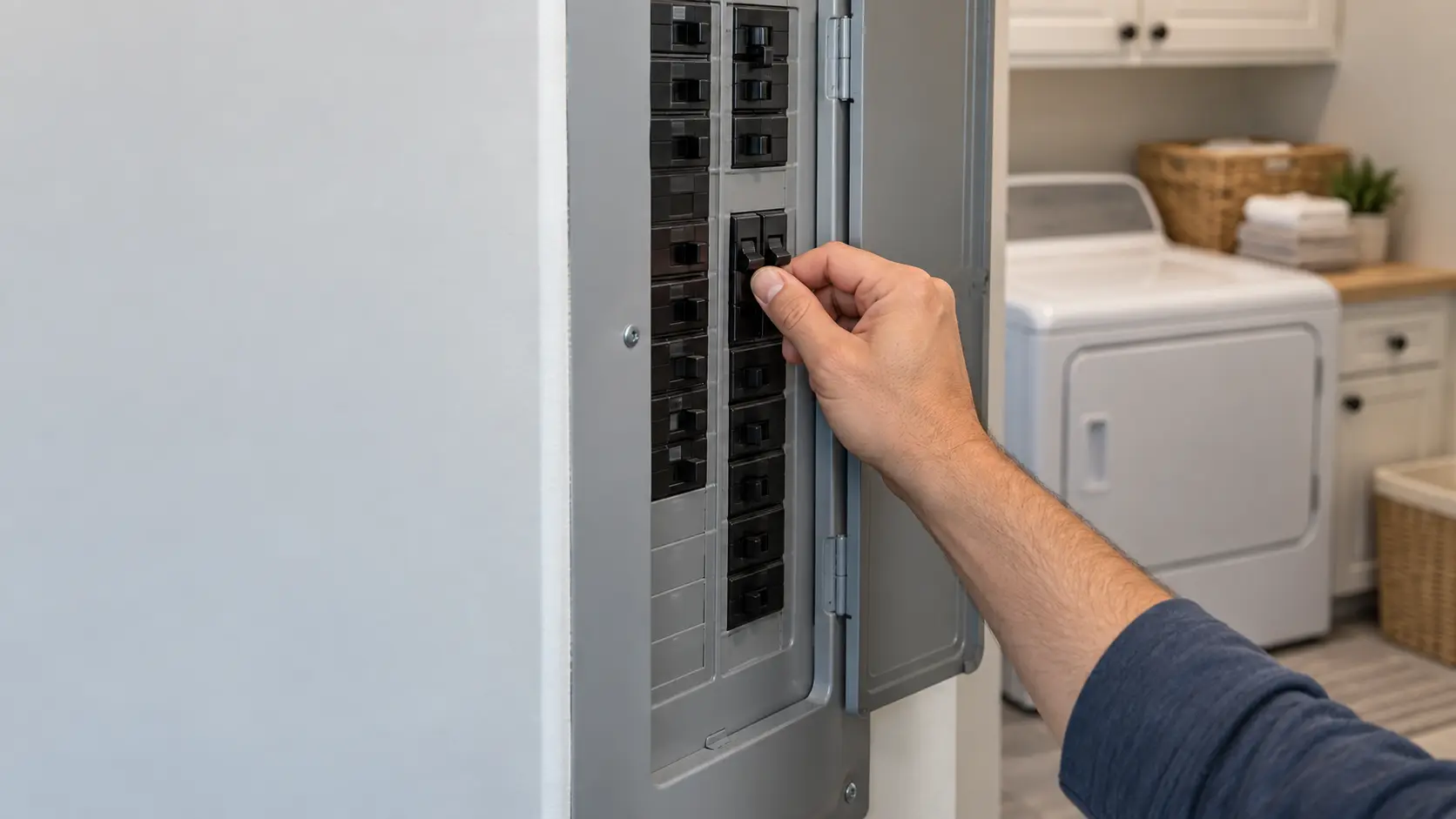
Dryer troubleshooting starts with power, and a completely dead dryer, with no lights, no sound and no movement, starts at the panel. Electric dryers use a double 240-volt breaker on their own circuit, while gas dryers plug into an ordinary 120-volt outlet, usually behind the machine. Switch the dryer breaker fully off and back on, and on a gas model make sure the cord was not pulled half out of the wall the last time the dryer moved.
Partial power has signs of its own, and they matter because they point at the supply rather than at the dryer:
- The panel lights up and the drum turns, but no heat arrives.
- The motor hums without turning the drum.
- The display flickers or resets when the dryer starts.
Where the plug is on each type
On a stacked pair the outlets usually sit high on the wall behind the stack; a single-unit laundry center normally has one cord for the whole cabinet. Compact ventless dryers vary, and some run on 120 volts while others need 240, so the electrical page of the manual is the place to confirm what yours expects.
Source: Whirlpool — Dryer is not heating — Electric dryers use a 30-amp, 240-volt circuit on two breakers; the gas valve is open when its handle is parallel to the pipe; Air Only adds no heat
Check 2: the door, the lock and the start button
Every dryer refuses to run with its door switch open. Shut the door with a normal push and pay attention to the click; a door that springs back, or has to be held shut to run, has a worn catch or strike. On electronic models, look for a lit padlock or control-lock light. A lock set by accident blocks every button, and the manual gives the button combination that releases it.
Some dryers want the start button held for a moment rather than tapped, and a delay-start left on makes the dryer look dead until its countdown ends.
- The door shuts with a clear click and stays closed
- No lock, delay or remote-start indicator is lit
- The cycle and heat level are the ones you meant to pick
Check 3: the lint screen and its slot
Pull the screen, clear it, and shine a flashlight down the slot it came from. Lint packed below the screen, or a sock pushed down into the housing, chokes the air just as badly as a full screen does. The longer version of this check, including washing the mesh and the duct behind the dryer, is in our guide to clearing the lint path.
Where the screen sits
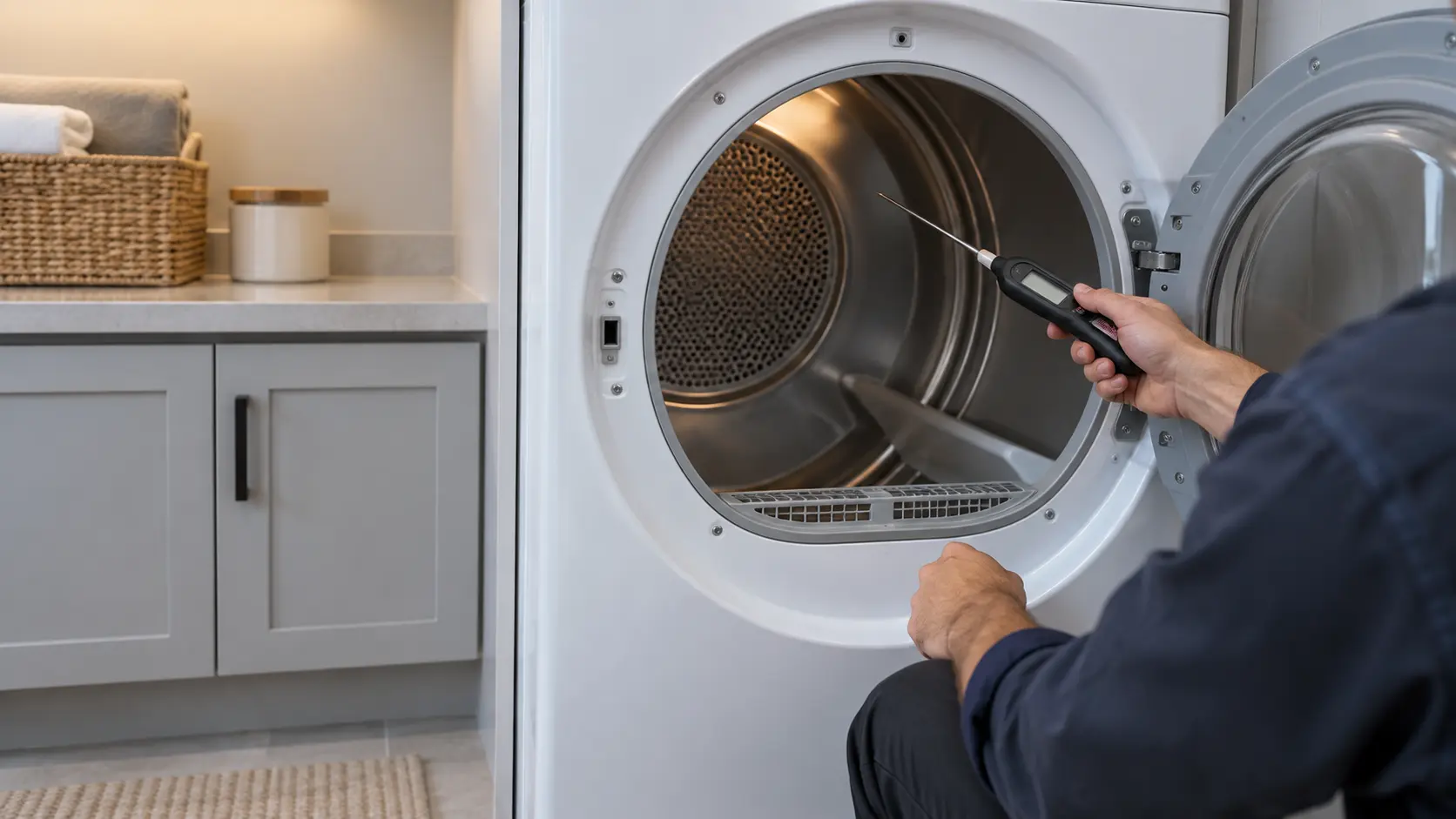
Many full-size dryers slide the screen out of the cabinet top; others hold it inside the door opening along the bottom rim, which is also where most stacked and compact dryers put it. Condenser and heat-pump models often add a second filter in front of the condenser.
Check 4: the vent cap outside
Walk outside while a heated cycle is running. Follow the direction the duct leaves the laundry room to find the hood; its flap or louvers should be open, with warm air pushing out. CPSC recommends exactly this check, looking at the outside vent while the dryer is operating, and says that if exhaust is not escaping, the vent or duct may be blocked.
Nests, lint caked on the flap and louvers painted shut are the usual findings. Note what you saw, even if you cleared it, because a hood that clogs quickly says something about the duct behind it.
If the dryer has no outside vent
Heat-pump and condenser dryers do not send air outdoors at all. ENERGY STAR explains that the water they pull from the load either runs to a drain or fills a holding tank, so for them this check becomes the tank, the drain hose and the condenser filter.
Source: CPSC — Overheated clothes dryers can cause fires (Pub. 5022) — Check the outside vent while the dryer runs; no exhaust means the vent or duct may be blocked; ENERGY STAR — Clothes dryers — Heat pump dryers need no exterior vent; their condensed water is drained or held in a tank
Check 5: the gas valve and the cycle
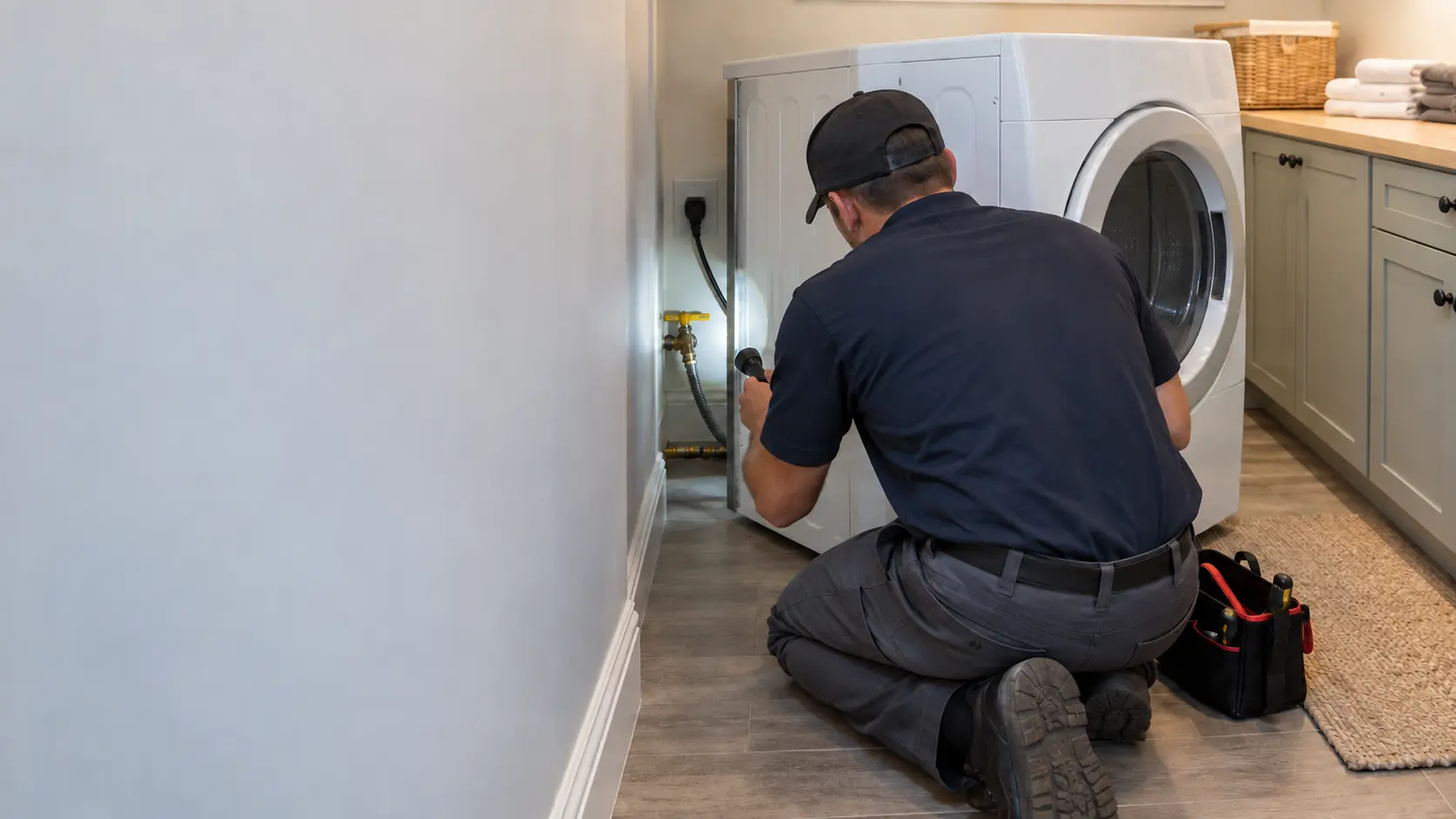
On a gas dryer, find the quarter-turn valve where the gas line meets the flexible connector behind the machine; Whirlpool treats it as open when the handle runs along the pipe rather than across it. Do not turn anything, and leave the house, if you smell gas. On any dryer, confirm that the selected cycle adds heat at all, because air-only settings never do.
While you are at the door opening, write down the model number and anything the display showed. With those five answers and the model, a technician arrives knowing which parts are likely rather than starting from nothing.
Keep the answers in the order you made the checks. It sounds fussy, but a note that reads breaker reset, door clicks, screen clean, weak flow at the hood already points the visit at the vent rather than at the heater.
Source: Whirlpool — Dryer is not heating — Electric dryers use a 30-amp, 240-volt circuit on two breakers; the gas valve is open when its handle is parallel to the pipe; Air Only adds no heat


