
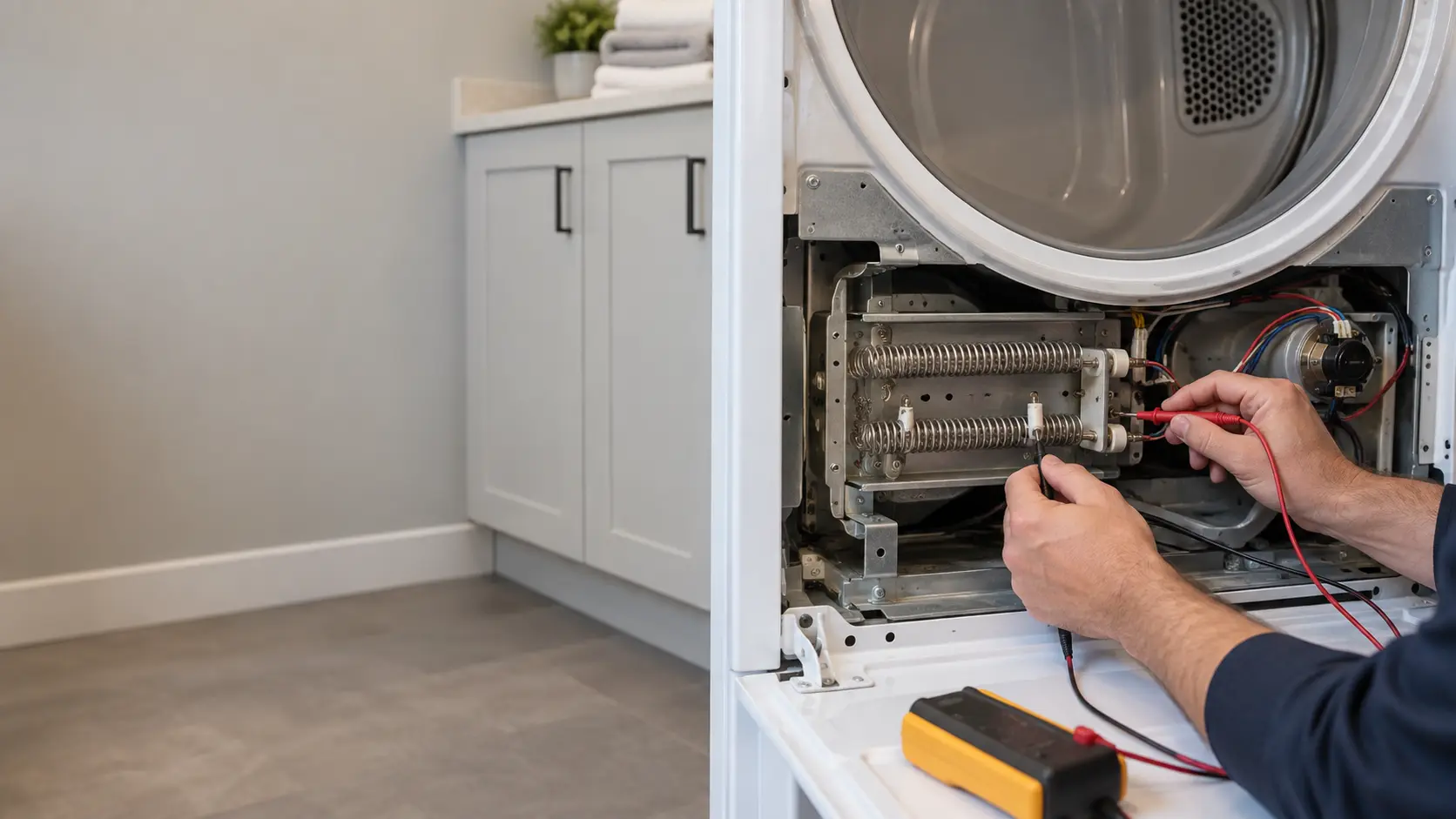

Why the load came out like that
Common problems
guides.
What a dryer means when loads stay damp, cycles run long, the drum goes silent or the cabinet gets hot.
Mon–Sat, 8am–8pm
- Three guides
- Read before you book
- Says where to stop
Book a visit
Three short steps, about a minute.
or call (844) 314-5837
Loading appointment form…
The appointment form couldn’t load. Please try again.
Common problems,
guide by guide.
This section starts from the moment you open the dryer door and find something wrong: a warm drum full of cold, damp towels, a load that needed a second and third run, or a machine that went silent halfway through with the clothes still wet. Each of those has a short list of usual causes, and the guides put that list in the order the causes actually turn up.
All 18 guides
Why dryers stop heating, gas and electric


Why a dryer stops mid-cycle, and when that is normal
Why the load came out like that.
Every guide follows the air and the heat. Air comes in, is warmed by an element or a gas burner, passes through the tumbling clothes and leaves through the lint screen and the vent. That route is the same on an electric, a gas, a stacked and a ventless dryer, but the parts sit in different places on each, and the guides say where.
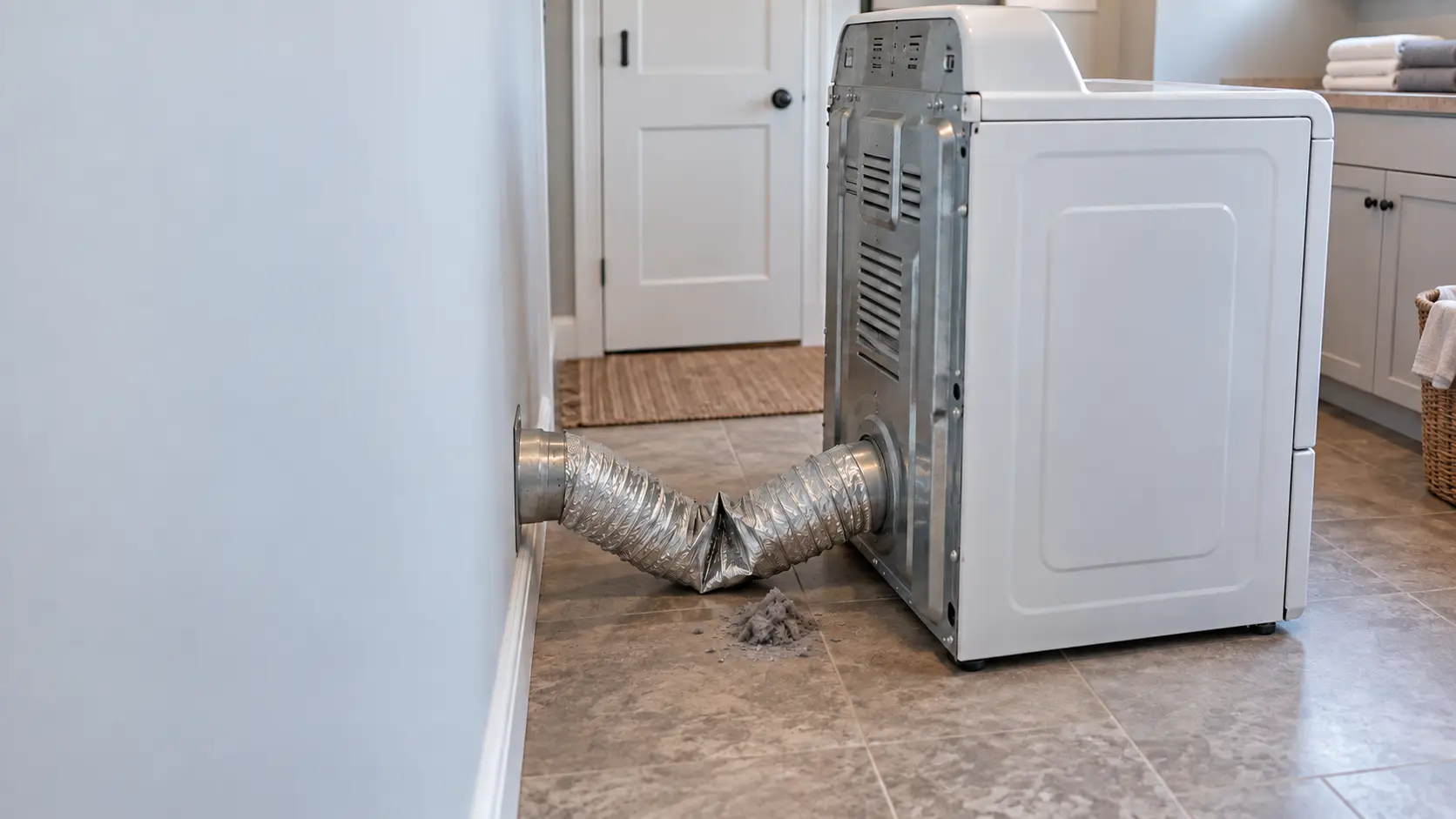
Read them before booking. Many finish at a breaker, a gas valve handle, a coated screen or a crushed duct, and the rest say plainly where an owner should stop and what to describe when you call.
Not sure where to start?The short answerWhy dryers stop heating, gas and electric
A dryer stopped heating while the drum still turns has usually lost one of four things: one leg of its 240-volt supply, its gas supply, a safety part that opened because the vent is restricted, or the heat source itself.
The short answerWhy clothes take too long to dry, from the load to the outside vent
When clothes take too long to dry, the heat is usually working and the airflow is not.
The short answerWhy a dryer stops mid-cycle, and when that is normal
A dryer shuts off mid-cycle for three broad reasons: a sensor cycle judged the load dry too soon, a thermal protector opened because the dryer or its motor got too hot, or the door or power circuit dropped out.
When reading
is not enough.
If the checks in these guides did not settle it, the visit picks up from there, stop by stop.
What repairs cost- 01Test before touching
- 02The price comes first
- 03The right part
- 04Repair and a test load
The problems
these answer.
Each has a page of its own, with the causes in the order worth checking.
All 17 problems


Questions about
common problems.
Which of these guides should I read first?
Are the guides written for one brand?
What if the dryer smells of burning or of gas?
The other
sections.
Split by what you are trying to find out rather than by which part of the appliance it concerns.
All guides


Back to your everyday
Let’s get your dryer working again.
Three short steps online, or one call. Tell us what you are seeing and pick a window that works.