
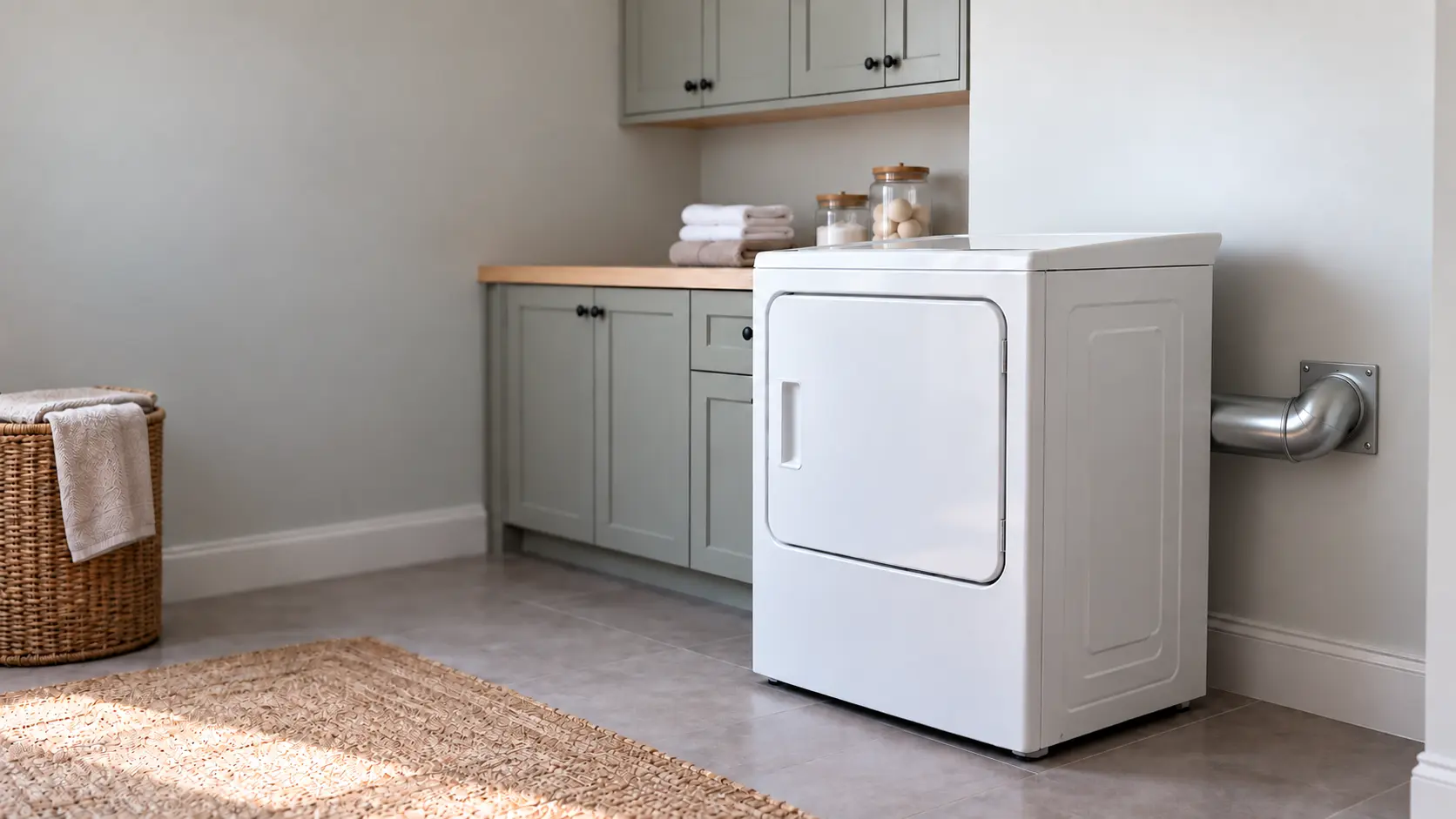

Setting it up to last
Installation and setup
guides.
Vent length and material, the gas hookup, the 240-volt outlet, leveling, and what a closet or stacked installation needs.
Mon–Sat, 8am–8pm
- Three guides
- Read before you book
- Says where to stop
Book a visit
Three short steps, about a minute.
or call (844) 314-5837
Loading appointment form…
The appointment form couldn’t load. Please try again.
Installation and setup,
guide by guide.
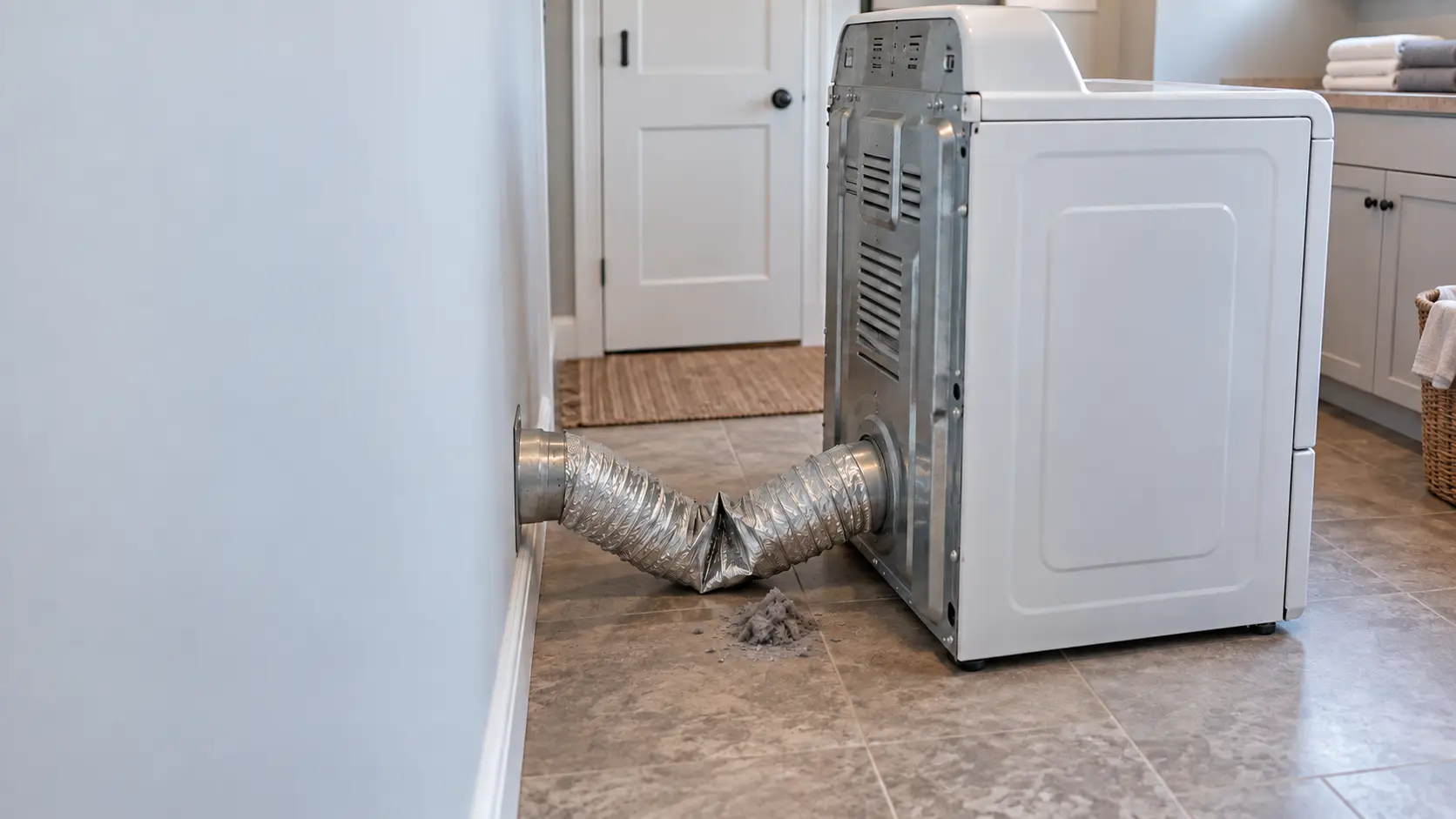
Three things connect a dryer to the house: the exhaust duct that carries hot, damp air outdoors, the electrical supply, and on a gas model the fuel line. Each is decided on installation day, and each can make a healthy dryer look broken for years, with slow loads, a tripped breaker or a thermal fuse that keeps opening.
All 18 guides
Dryer Vent Length and Material: What the Manuals Allow

The 240-Volt Dryer Outlet and Cord

Gas Dryer Connection: What It Should Look Like
Setting it up to last.
These guides describe what a correct setup looks like, drawn from the manufacturers' installation instructions: how long and how bent a vent run may be and what it should be made of, how the 240-volt outlet and cord should match, and what belongs between the gas shutoff valve and the back of the dryer. Most of it can be checked with a flashlight and a tape measure without moving the machine.
They are most useful before a new dryer is delivered, after a move or a remodel, and when a dryer that used to work well has started drying slowly. Each one also says plainly where the work belongs to an electrician, a gas installer or the utility.
Not sure where to start?The short answerDryer Vent Length and Material: What the Manuals Allow
Maximum dryer vent length is set by the manufacturer's installation manual, not by a single rule: it depends on the number of elbows and the type of outside hood, and shrinks with every turn.
The short answerThe 240-Volt Dryer Outlet and Cord
A 240-volt dryer outlet feeds an electric dryer from its own 30-amp double breaker.
The short answerGas Dryer Connection: What It Should Look Like
A correct gas dryer connection runs from a rigid supply pipe to an accessible shutoff valve within 6 feet of the dryer, then through a new, listed flexible connector no longer than the manual allows, into the dryer's 3/8-inch inlet.
When reading
is not enough.
If the checks in these guides did not settle it, the visit picks up from there, stop by stop.
What repairs cost- 01Test before touching
- 02The price comes first
- 03The right part
- 04Repair and a test load
The problems
these answer.
Each has a page of its own, with the causes in the order worth checking.
All 17 problems


Questions about
installation and setup.
My new dryer takes longer than the old one did. Could the installation be the cause?
Can I install a gas dryer myself?
What should I look at before a dryer is delivered?
The other
sections.
Split by what you are trying to find out rather than by which part of the appliance it concerns.
All guides


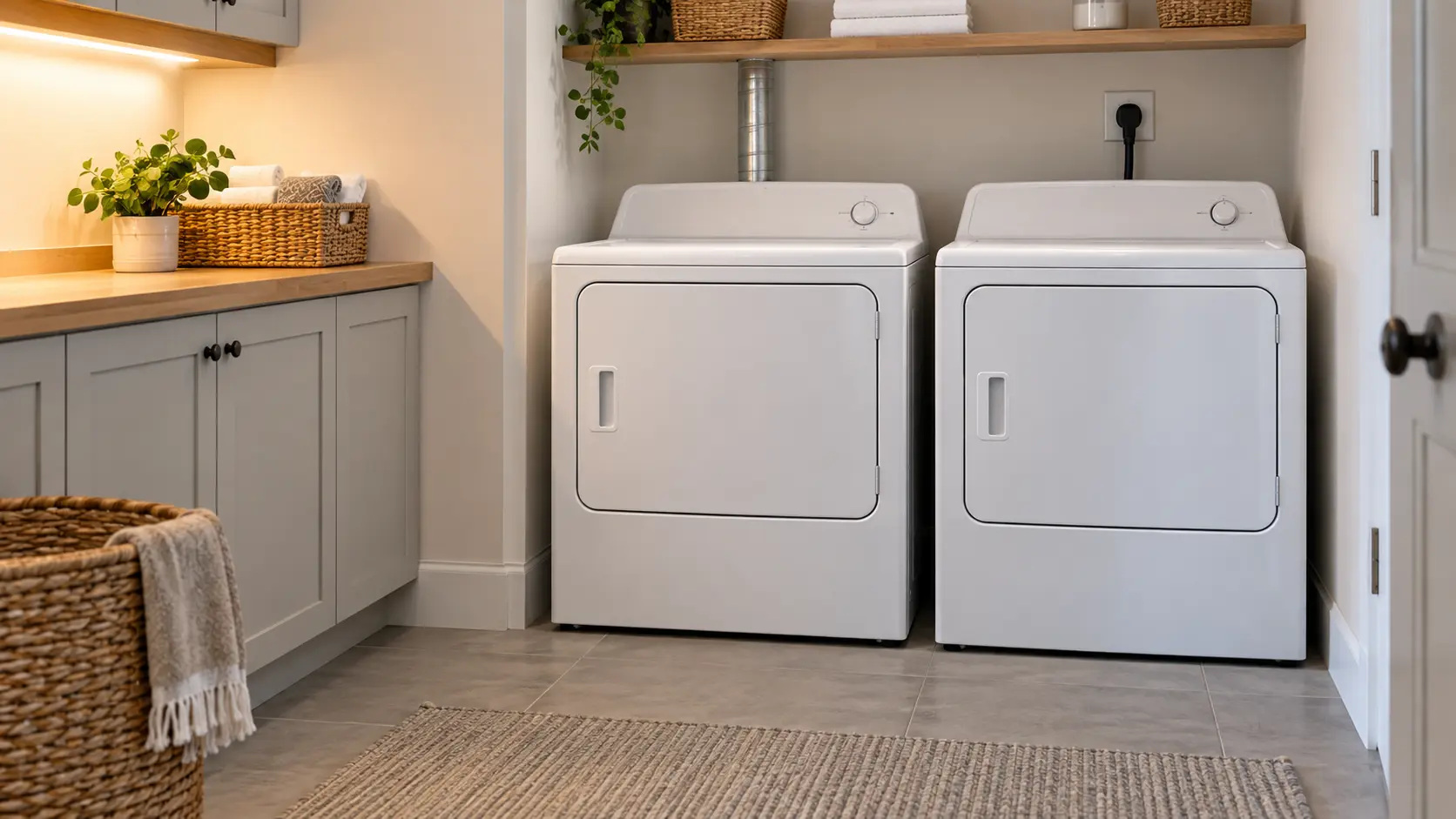
Back to your everyday
Let’s get your dryer working again.
Three short steps online, or one call. Tell us what you are seeing and pick a window that works.