
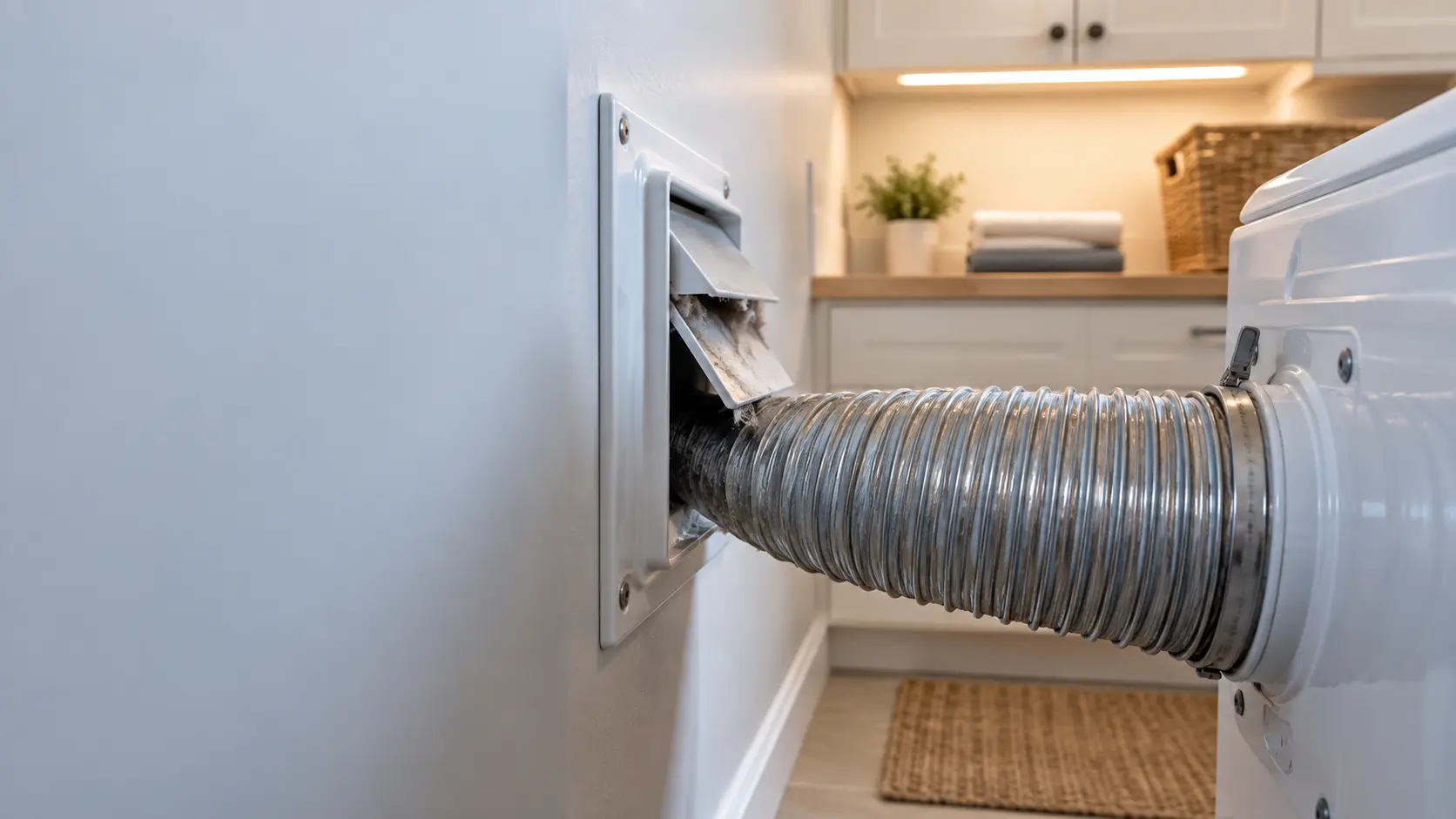

Keeping the dryer out of trouble
Maintenance and prevention
guides.
The few habits that prevent most dryer calls, from the lint screen to the vent run, and how often each is worth doing.
Mon–Sat, 8am–8pm
- Three guides
- Read before you book
- Says where to stop
Book a visit
Three short steps, about a minute.
or call (844) 314-5837
Loading appointment form…
The appointment form couldn’t load. Please try again.
Maintenance and prevention,
guide by guide.
These guides cover the small, regular jobs that keep a dryer drying quickly and running cool: the lint screen and duct, the sensor strips that decide when a cycle ends, and the drive parts that carry the drum. None of them needs special tools, and each one says how often it is worth doing.
All 18 guides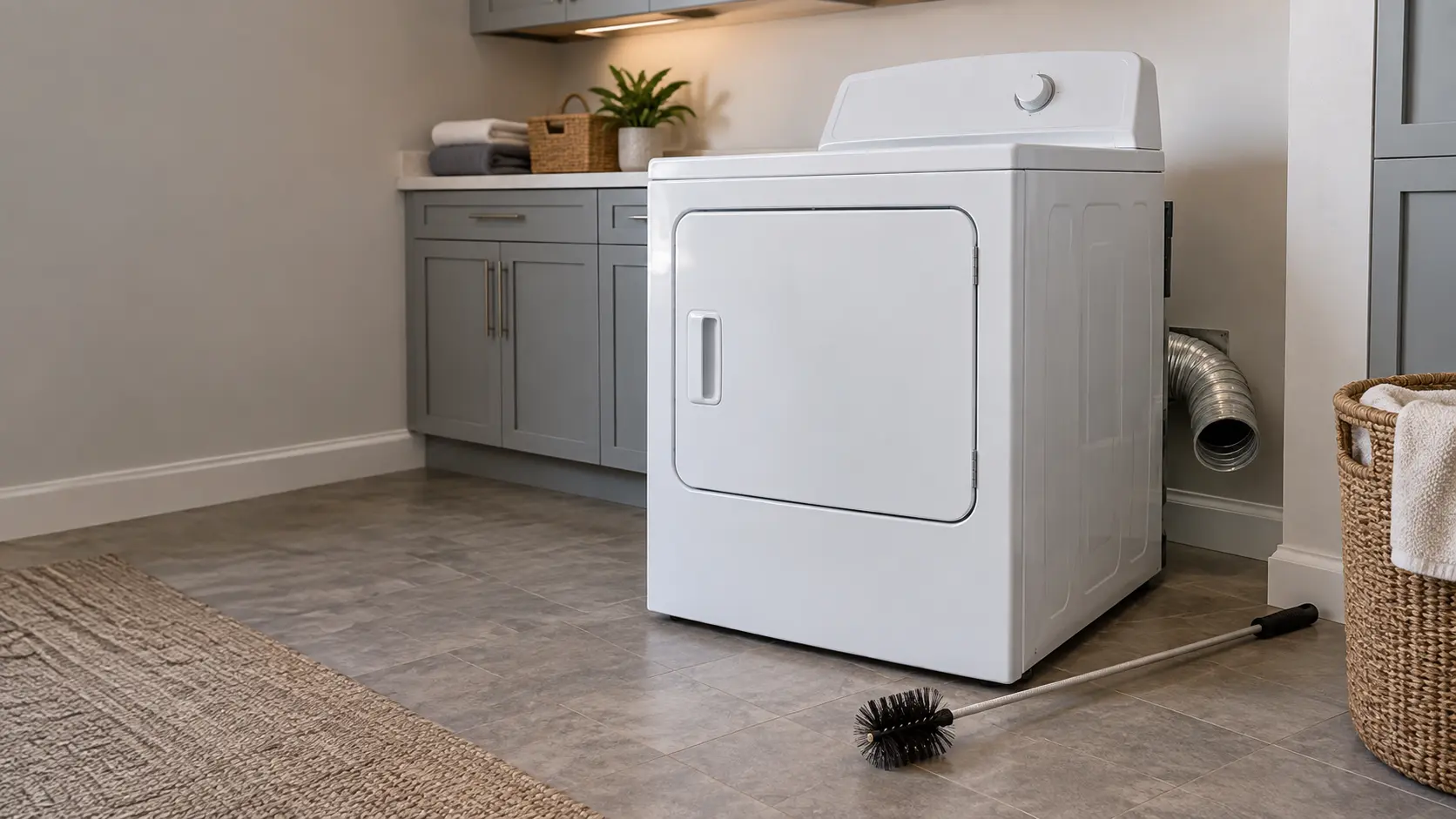
Dryer vent cleaning schedule: screen, slot and duct


Belt and roller wear: what the thump and squeal mean
Keeping the dryer out of trouble.
The common thread is airflow and running hours. A dryer that breathes freely finishes sooner, so its heater, fuse, belt and rollers each see fewer hours of work. A dryer that struggles for air wears out everything at once, and in the worst case sets lint alight.
Start here if drying has slowed, if you have just moved into a home with an unknown vent, or if you want a simple routine that heads off the most common service calls.
Not sure where to start?The short answerDryer vent cleaning schedule: screen, slot and duct
A sensible dryer vent cleaning schedule has three layers: clear the lint screen every load, wash the screen when it stops passing water, and clean the whole duct once or twice a year.
The short answerThe moisture sensor and dryer sheets: why cycles end damp
A dryer moisture sensor is usually a pair of metal strips near the lint screen that read wetness when damp clothes touch them.
The short answerBelt and roller wear: what the thump and squeal mean
The dryer belt and rollers carry and turn the drum on every load, so they are wear parts rather than defects.
When reading
is not enough.
If the checks in these guides did not settle it, the visit picks up from there, stop by stop.
What repairs cost- 01Test before touching
- 02The price comes first
- 03The right part
- 04Repair and a test load
The problems
these answer.
Each has a page of its own, with the causes in the order worth checking.
All 17 problems


Questions about
maintenance and prevention.
What is the single most useful habit for a dryer?
Do ventless dryers need less maintenance?
When should maintenance give way to a service visit?
The other
sections.
Split by what you are trying to find out rather than by which part of the appliance it concerns.
All guides



Back to your everyday
Let’s get your dryer working again.
Three short steps online, or one call. Tell us what you are seeing and pick a window that works.